Juin, l’ete commence

Late spring crashed into early summer, and then rapidly exploded into the sort of sauna like conditions that uniquely sap my will to live. I’ve been trying really hard to be more active lately, mostly to improve my stamina. I’ve been walking 20-25 miles a week for the last two months, in addition to working in the garden, which has all been great, but now…I just cannot function in this heat. It sucks. Between perimenopause screwing with my ability to thermoregulate, the meds I take that have heat sensitivity as a side effect, and the fact that heat is a migraine trigger for me, things go from “unpleasant” to “getting scary” pretty quickly. So, I got a bit done in the garden last weekend, but for the most part I’m just going to have to let things out there fend for themselves for a week while I catch up on The Vampire Lestat and Taskmaster.

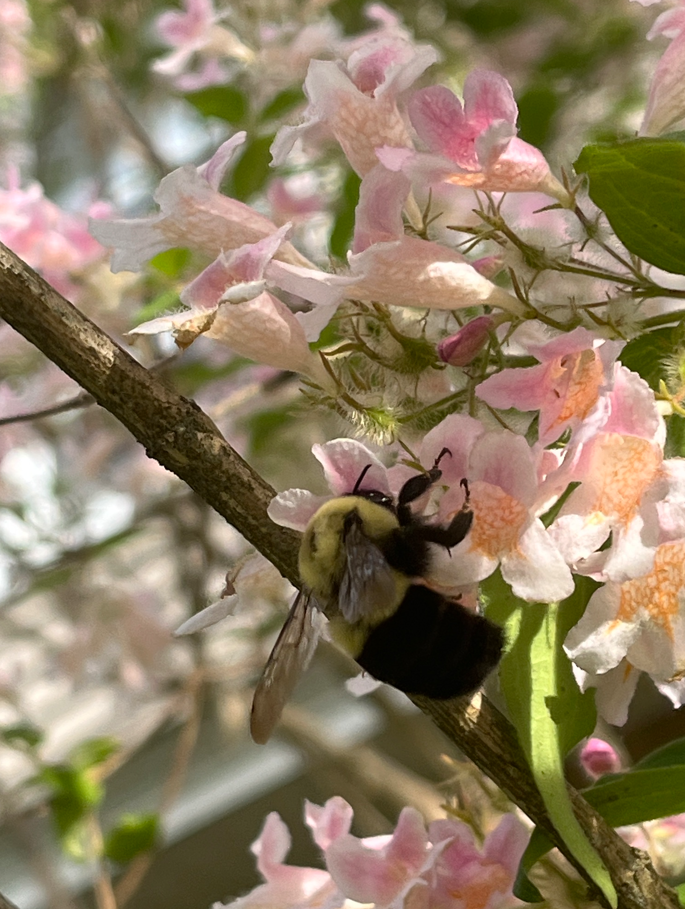
The beauty bush was a favorite with our local pollinators early this month. I’m not crazy about it because it’s nonnative ornamental, but at least it seems to feed the bugs, and it is in fact beautiful when it’s in full bloom.

Now that it’s summer, things are warm and comfortable for the bugs, and the invertebrate diversity and abundance climbs by the week. The shy spring ephemeral herbs have died back (relatable), replaced by the plants that will be with us through the summer and into fall, and after a rain it feels like you can juuuust about hear them growing as they jostle for position and do their best to outpace whatever’s grazing on them.

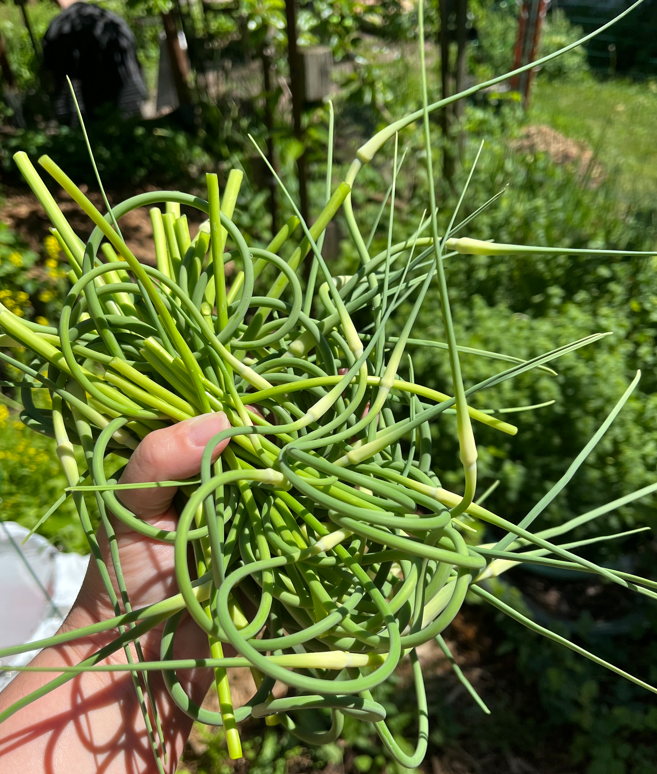
Garlic scapes, truly the crazy straws of the garden world.

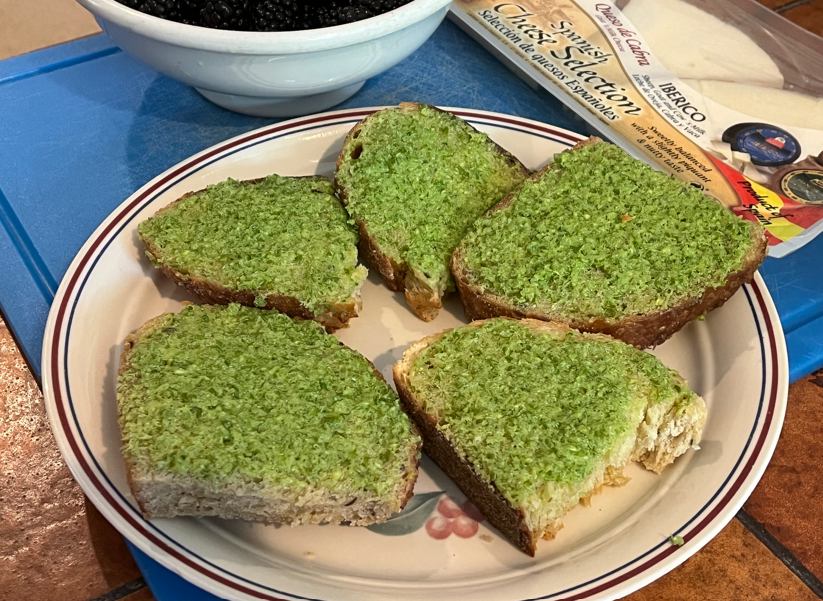
In the garden proper, we’re getting some of our first meaningful harvests of the year. The early culinary successes have been gratifying. One day I gathered up as many garlic scapes as I could, food processed them into a paste, blended that with stracciatella (aka burrata filling) and butter, spread it on thick slices of artisanal bread and baked it….and we had the best garlic bread I’ve had in my life. Like, I’m a fan of garlic, and garlic bread, in general, but this was next level shit. No idea why I was so slow to get on the “blending up scapes and baking them in stuff” train but I’m here now and I love it.

Seriously, the *best*

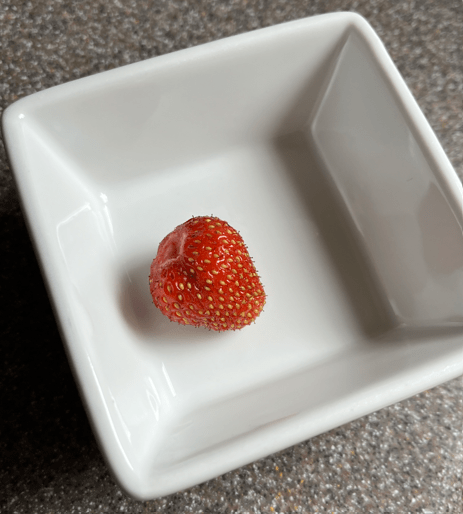
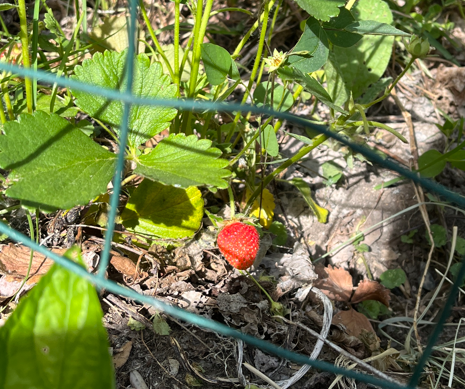
The critters left about two strawberries (out of so many) for us to sample this year. They were…not great, but the quality will improve as they get better established and happier. They have started to throw out runners so I’m hoping that one of these days there will be enough to keep us and the local fauna happy.

50% of the strawberry harvest that actually made it to human hands/mouths this year.

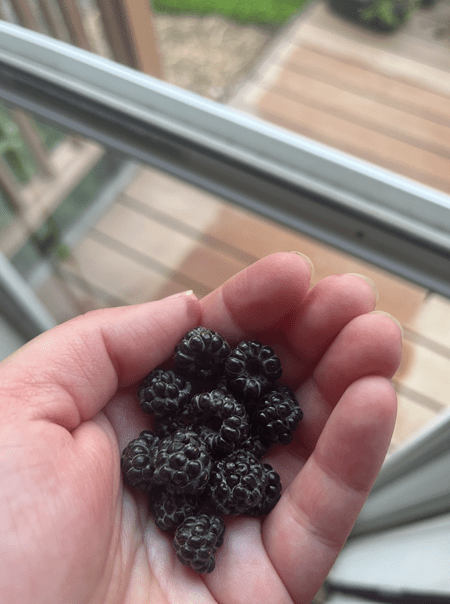
Our black raspberries are further along on that curve; this is the first year the berries have been as big and flavorful as they were before being transplanted to our yard. (They previously lived on a hill behind the dumpsters at the office building I worked at; at one point it was announced via email that that entire area of the grounds was going to be torn up “to clear out all of the invasive brambles”. I rather pointedly replied noting that they were a native species, and asked if they minded if I took some of them before they were destroyed. With the building owners’ blessing and my partner’s physical strength, we recovered a dozen plants to start our own backyard bramble with.) I think if we just saved up all the black raspberries we have picked/will pick this year, we’d have enough to make a pie; as it is we’ve been eating a handful of them apiece every day, because they’re so good on their own.

They taste like the summers of my childhood (because I picked and ate as many as humanly possible).

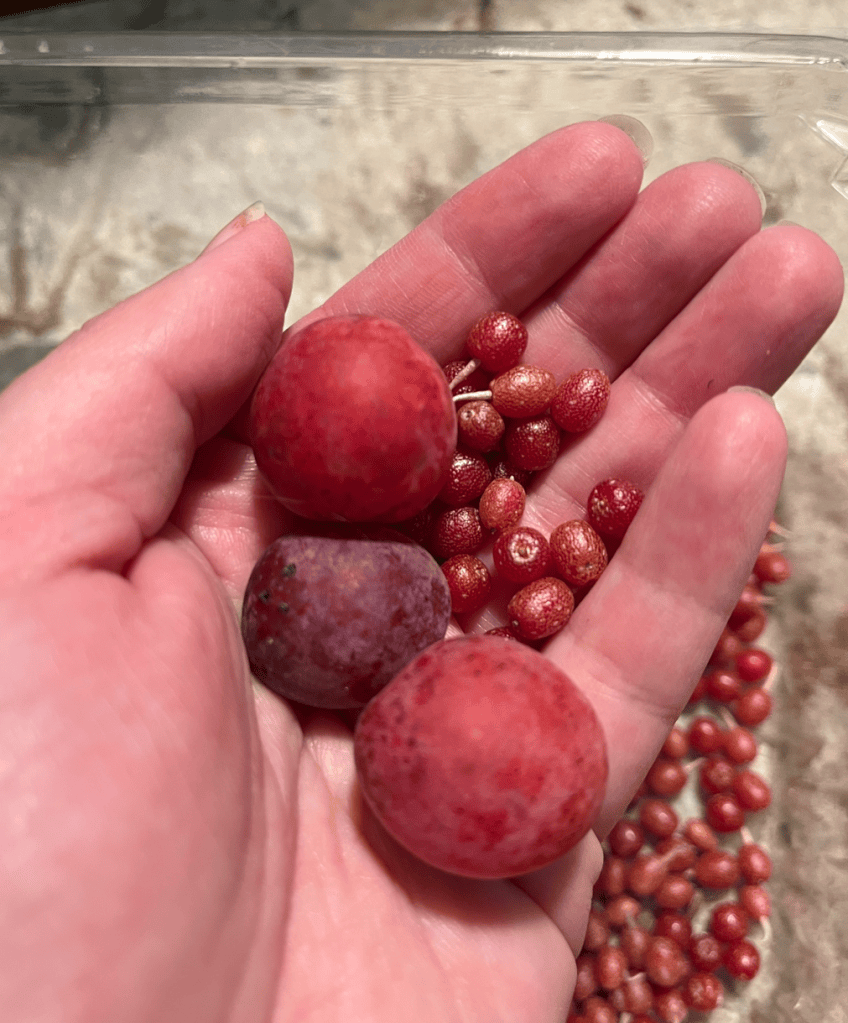
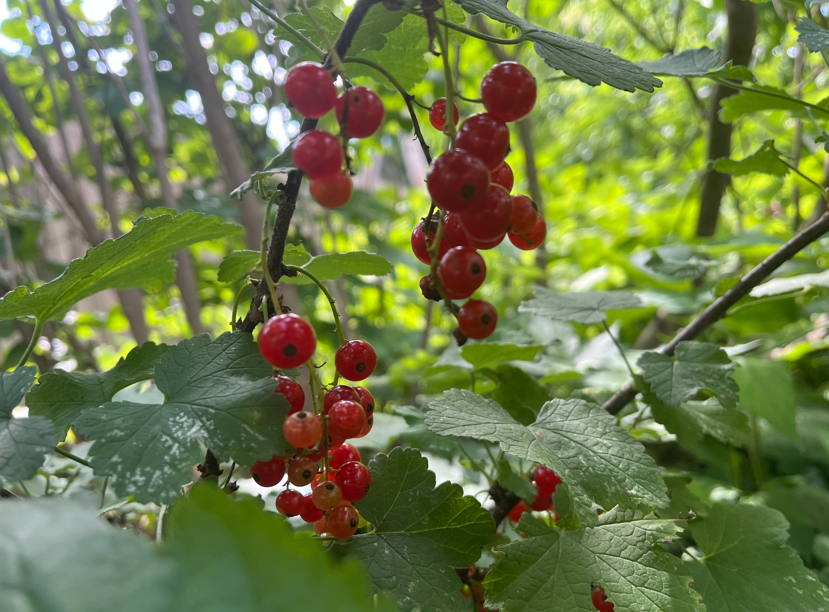
Unexpectedly, we got our first actual (modest) harvest of red currants this year. We didn’t actually intend to have red currants; the bush we have was yet another rescue from the cruel hand of conformist landscaping sensibilities, this time in the name of removing everything interesting from the yard of a house that was going to be sold, at the behest of the seller’s agent. It was late winter/very early spring at the time, so it was at least possible to dig things up, but there weren’t many features visible that one could use to identify the plants. One of the other rescuers thought it was a Nanking cherry, which we thought would be fun to try, so we nabbed it. Instead, when it leafed out in the spring, it quickly became clear that it was a Ribes species.

Red currants really are some of the most attractive fruit I’ve ever grown.

I’ve had bad experiences with Ribes. Black currants are common around here, and I’ve tried foraging them, but 1. more than 50% of the berries I’ve picked have had insect larvae in them, and 2. the ones that didn’t have resident bugs didn’t taste great. I actually thought about just ripping out the bush after the first year because I tried one of the berries and wasn’t impressed, but I left it because as it turned out, the resident chipmunk really loved them The sight of this ‘munk perched on a little branch in the bush cramming currants into its mouth was too hilarious and cute to deprive myself. That chipmunk disappeared sometime over the last year, though, and apparently the new one hasn’t gotten the memo regarding currant deliciousness, because the little bush is absolutely rife with beautiful, ripe, and apparently untouched currants. They don’t even seem to have any bugs in them, score! They’re a little tart, as they should be, but much better and sweeter than they were when I first tried them….once again, established plants that are not stressed and have abundant energy to pour into reproduction make tastier fruits! I went through and picked a bunch today, and they’re waiting in the refrigerator for a cooler day to be made into jelly.

Besides the aforementioned fruit, we’ve been nibbling on a handful of other things from the garden, like mustard greens and radish seed pods. We tried ditch lily flower buds for the first time, and were pleasantly surprised; uncooked they taste a bit like peas. I’ve read that they’ve even better sauteed in butter, so that’s on the list to try soon. We’ve also got our tomatoes, peppers, summer squash, and assorted other veggies and herbs transplanted into the garden, although I do have a few more things I need to find homes for, once it’s feasible to be doing physical labor outdoors again.

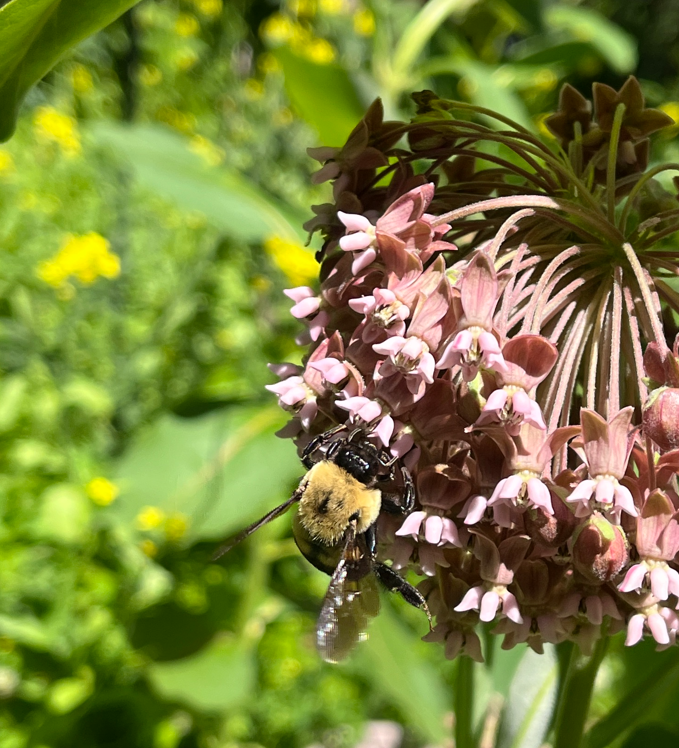
Milkweed flowers are awesome, according both to me and our local pollinators.

I had one of those moments of synchronicity recently that the universe occasionally throws at you (or, you know, which our powerful ability for pattern matching picks out of the noise around us – but that’s a less fun idea). I have, like many of us I’m sure, been feeling powerless and isolated, especially in the face of so much awful national news for wildlife and public lands. I’m so frustrated and scared about the damage that is actively and purposefully being done to the biosphere, and that the people who voted for those things are so incapable of understanding, admitting, or caring about the harm they’re doing. I have spent a lot of time wishing I knew what I could do about those things that matters, what magic words I might say. I felt stuck.

The first thing that helped me get unstuck was an interview I saw recently with HCR, where she talked about focusing not changing minds, but just mobilizing the people who will vote against the absolute vile nonsense happening right now. And, she’s right, the trick isn’t to bring people from the far side all the way across the line – it’s to make sure that everyone who’s on your side actually shows up to the fight. That’s empowering, that’s a helpful thing to focus on. That’s something that can actually be done that will matter.

The second thing that helped was that I went to a workshop on native garden planning last weekend, run by a local organization that, among other things, supports rewilding efforts in my town. The aim of the workshop was to help people who wanted to bring native plants into their yards figure out how to do so in a way that was doable for them. It was absolutely delightful to spend a morning in a room full of people who all cared about finding ways to support native flora and fauna in their own yards. And, as it turns out, the organization is looking for volunteers at the moment.

So, there it is. The opportunity to get involved, dropped right into my lap. I’m reaching out to them soon to figure out exactly what my involvement might look like, but I have the feeling I’ll find a niche for myself with them, and there’s nothing quite like the excitement of figuring out how to apply the skills, knowledge, and resources you have in a way that matters to something you care about.

May, accelerating into summer

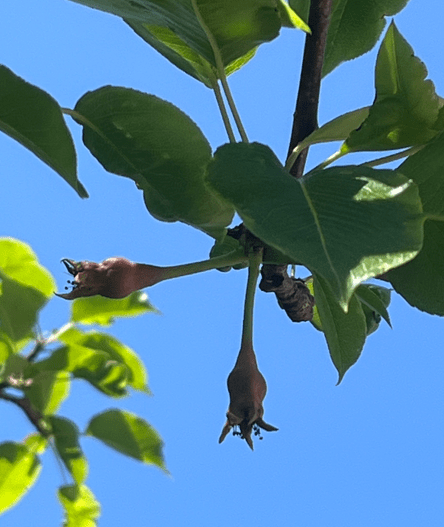
Spring progresses, slipping prematurely into summer at times.  The jagged progression of temperatures has had some casualties; in particular, due to a late freeze in April, I think we lost our entire plum crop and 95%+ of the pears.  On the bright side, I guess, I am not having to spend any time culling tiny pears, and the ones that do make it will likely be larger.  In previous years we’ve had issues with how absurdly productive the trees are – with branches breaking under their weight – so it’s also probably a good thing for the trees to have a year off.  It’s a bit of a bummer, to be sure, because we and so many people around us look forward to those pears every year, and they have been SO very reliable in the past. It feels like a pointed reminder of the fragility of the systems we depend on, including agricultural ones, and the necessity of both redundancy and diversity.

A couple of the surviving bebeh pears. Good luck, bebeh pears!

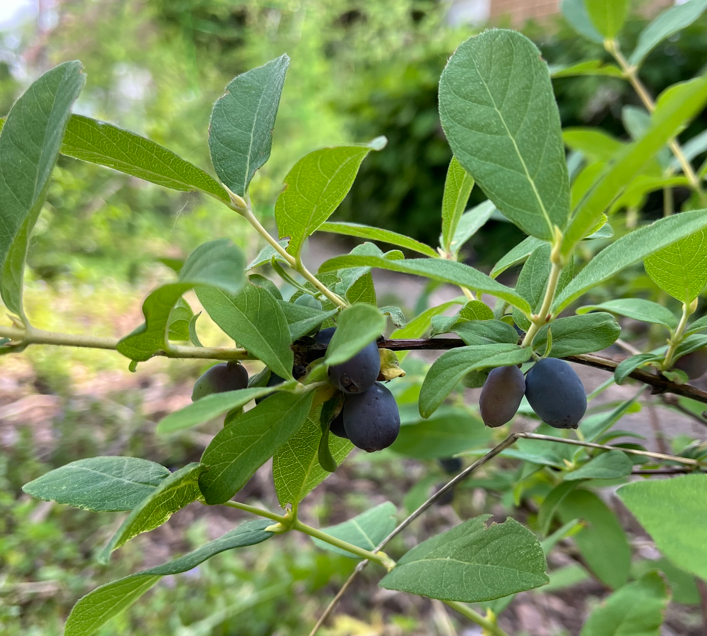
In fact, it is looking like it’ll be a better year for some of our other fruits, although not in sufficient volumes to compensate for the pears. The black raspberries are coming along nicely; I’m not convinced we’ll be at “pie” volumes yet, but I think we’ll at least graduate from “eat three berries and be glad for it” to “eat a few handfuls of berries apiece” territory.  Our honeyberries have also really started taking off; the bushes are looking flush and healthy, and I’m regretting not giving them more space.  Looks like they might be sending up some suckers so I may be able to spread out their clones, at least.  We were not very impressed with the couple of extremely sour berries we tried last year, but I have since learned that we likely picked them far too early; apparently you’ve supposed to give them a good 3-4 weeks after they turn dark blue, and only pick them once they’re just about falling off the plant, and the flesh inside the berry has turned from green to blue.  I’ll report back next month, since they’ve started cascading into blues this week.  

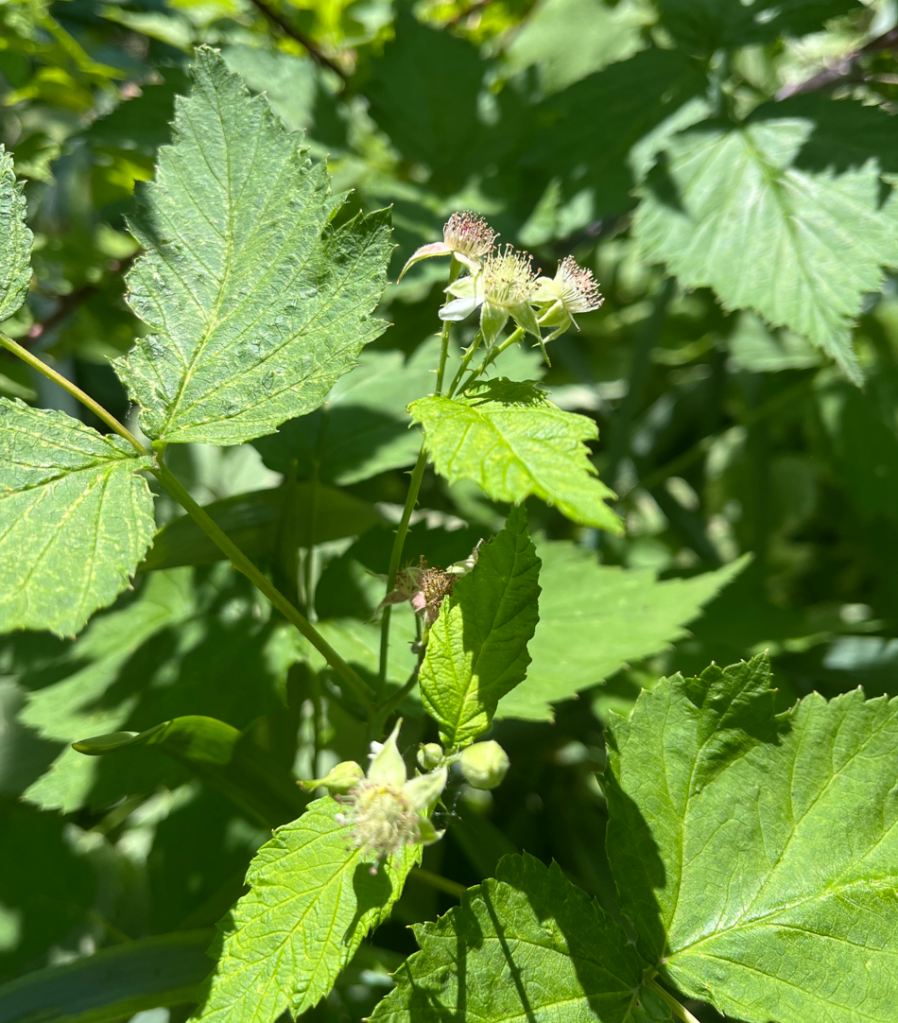
Black raspberry flowers, looking good!
Honeyberries, aka haskaps! Not locally native, but at least they’re from this continent.

The strawberries – many of which were plants recovered from a dumpster last year when entire trays of them were tossed out – are coming along nicely.  Will there be enough that the critters will not eat all of them, or at least not take a bite out of every one?  Unclear.  The plants do seem to be doing their dead level best to produce, though, and I’m optimistic.

I’m rolling the dice by letting this one continue to ripen in the vine, but I have this dream of having one perfectly ripe and fragrant strawberry from my own damn garden. Not sure the critters will allow that, but I can dream?

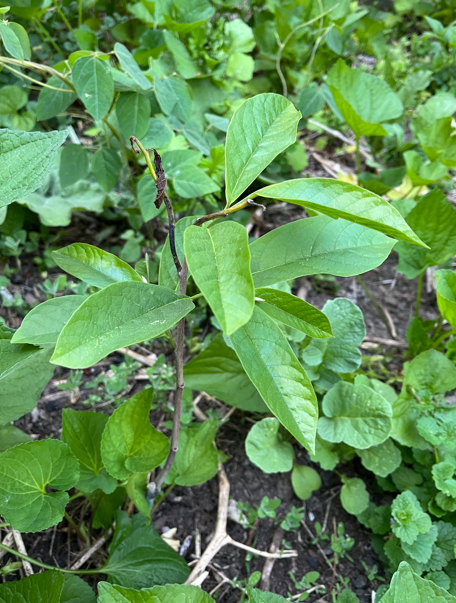
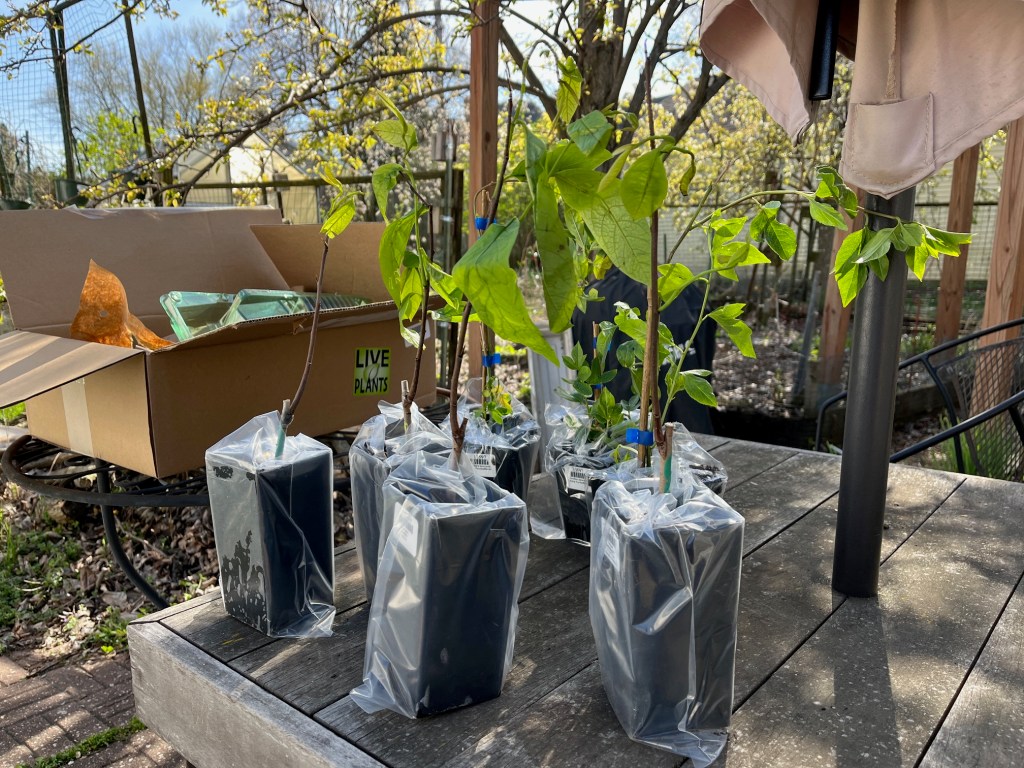
In other perennial news – the pawpaws I put in recently seem to be settling in quite well.  I was quite worried – two of them were reduced essentially to sticks for a while, and the other two only had jagged, decrepit leaves remaining after shipping – but they are all slowly and steadily leafing out and seem at least somewhat happy where they are.  Just gotta keep them going for 5-7 years now to get them to fruiting age, about the same wait as we’ve got for the little American hazelnuts.  I look forward to enjoying them all in my 50’s.  

This pawpaw was a sad little twig when it arrived, but it’s been leafing out nicely!

Over the holiday weekend, my partner undertook the major project of turning the compost pile.  The pile is about 6’x6’, around 3’ tall, so this is truly a *project*.  Over the course of about three days he raked out the top layers, transferred the finished compost at the bottom over to the “ready to use” pile, and then mixed and raked everything remaining back into a nice pile.  The fencing around the pile is on its last legs, so the tentative plan is to rip the structure out one of these years, and build a new one with several sections for material of various levels of degradation, in hopes that it makes the pile a little easier to manage.

(I have chosen not to include a picture of said compost; be assured that it is teeming with life and earthy smells.)

While my partner was pitchforking through the muck, I worked on transplanting tomato plants I started from seed, and bell peppers from a friend.  Have also gotten a few of my skirret starts into the ground; I’m curious to see how well they do, considering that I think their ph preferences clash with the current batch of compost (being that it’s heavy on wood ash).

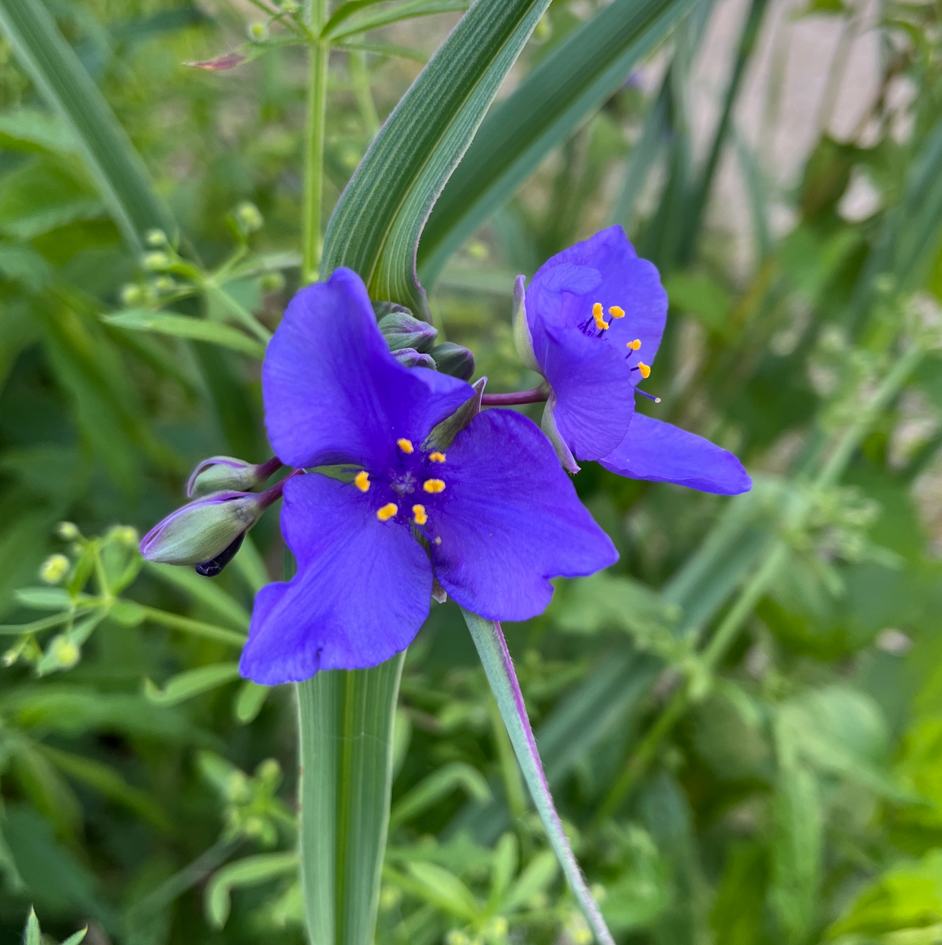
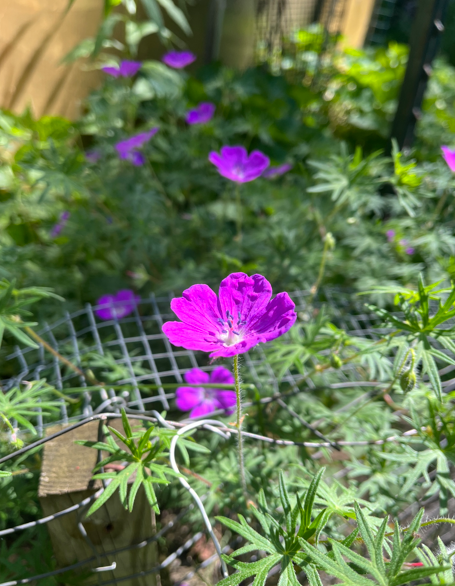
Here’s a cool spiderwort from the yard, before I get into the heavy thoughts.

I’ve been noticing that insect abundance is surprisingly low at the moment. It may not stay that way, and I’m not saying we should all panic or anything, this is just one local observation. It’s just been hard to ignore when it’s so obvious in my day to day. In past years, when the pears and plums were blooming, or the honeysuckle, or the salvia, they would be covered in bees of at least a dozen species. There were so many that the buzzing rose to a pleasant, constant hum, like a little pollinator kazoo chorus during the daytime. There are still bees, of many species, but their numbers are considerably lower, and I miss their little buzzy background noise.

It’s difficult to spend so much time in close contact with nature and not think about the polycrisis, because there are a hundred reminders, like the bees, and the pears I mentioned above. Sometimes that’s sad – a reminder of things that have been lost, and things that will be lost. It’s also interesting, though, and a reminder that the only constant in life is change. I commented to a friend recently, in a conversation about current happenings in politics, trade, and war, that it was in many ways a deeply frightening time to be alive – but that it’s also an incredibly interesting one. I probably engage with more of the scary information than I need to, because understanding it, parsing it, gauging reliability, and stitching together greater understanding from the pieces, is just so bloody fascinating.

But, I know who I am, and my tendency towards anxiety, so I can’t always engage with that knowledge. Sometimes I need to go plant a seed, pull an invasive, or water a plant, and just remind myself that there are things that I can, if not control, at least influence. And so again, I find myself back in the garden, because it’s therapy.

View of April, facing the garden

Spring hath sprung, and continues to spring along at rates I cannot hope to keep pace with, but that’s part of the fun, and I try anyway.

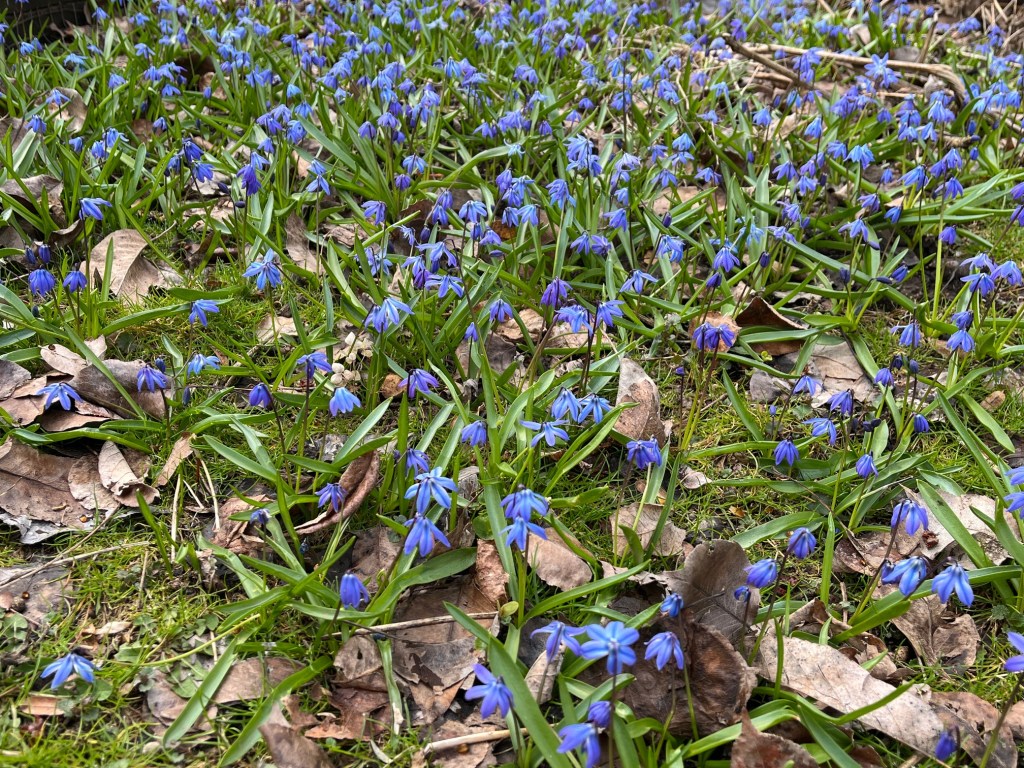
The first flower up and blooming in the yard was, as per usual, Siberian Squill (Scilla siberica).  She is beautiful, but she is also fecund, inedible to native wildlife, and persistent.  She is my garden nemesis.  

Pretty, but seriously, fuck this plant.

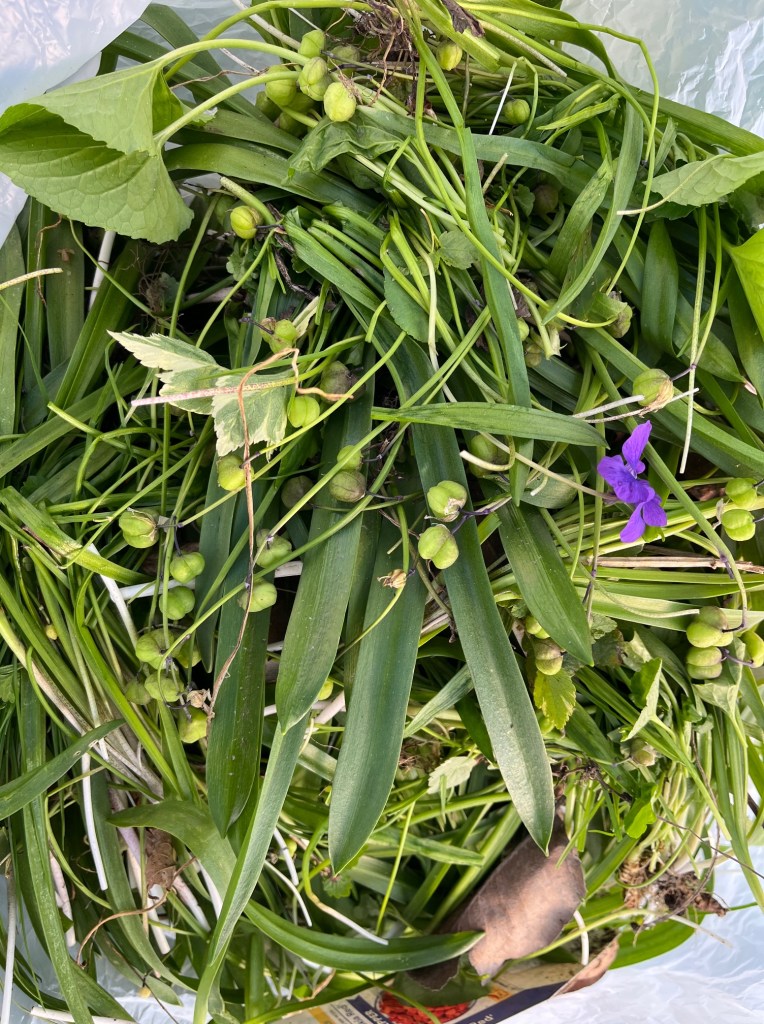
This year, starting in late March, I have pulled up three full plastic grocery bags worth of squill, doing my best to get the bulbs.  I barely made a dent in them.  They’ve likely been here decades longer than me, so it’s going to be a years-long uphill battle, but they’re simply too invasive and aggressive for me to tolerate them in the numbers they’re in.  I am researching early blooming native alternatives, because squill at least does the courtesy of having very early and cold-tolerant blooms, which help provide for insect pollinators as they wake up, but it’ll be a long time before I make enough of a dent in them to necessitate functional replacements.

At this stage in the season I’ve abandoned the notion of trying to pull bulbs, and am instead focusing on just pulling up the plant (so it can’t keep feeding the bulb) and getting the seed pods (because each of those puppies have like a hundred seeds in them, and the germination rates are insane). Don’t worry about the violet caught in the friendly fire, we’ve got a bazillion of them.

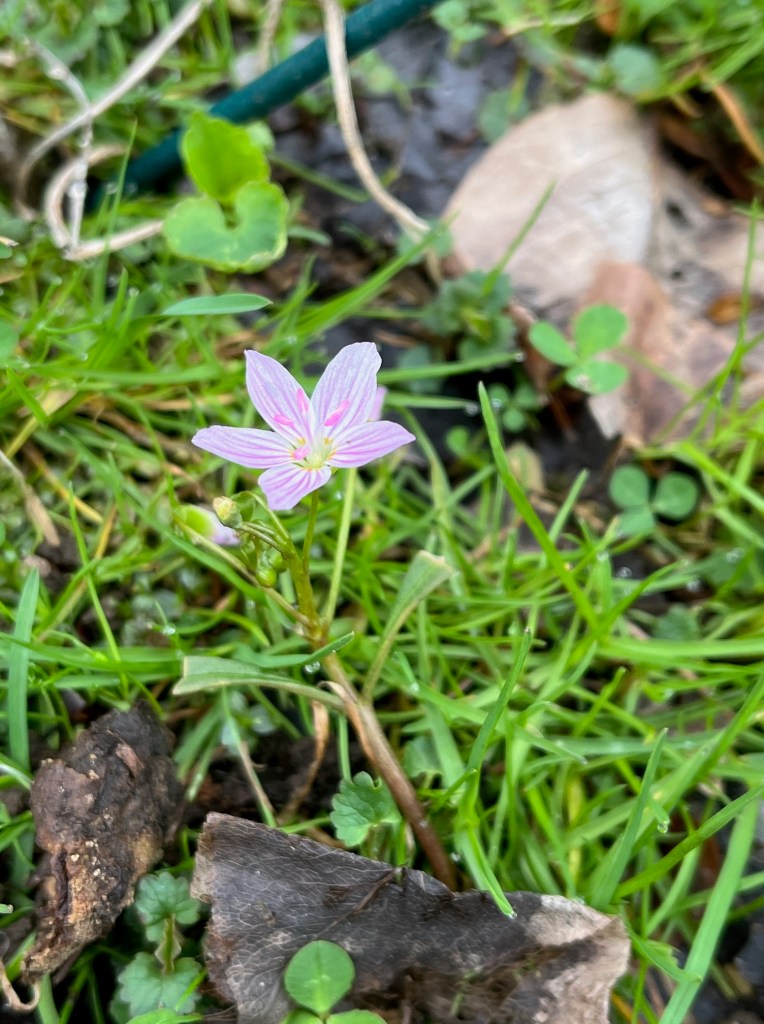
Counterbalancing the unexpected and unwelcome squill, is the unexpected and very welcome Spring Beauty (Claytonia virginiana).  I picked up some seeds for this woodland spring ephemeral about four years ago, and spread them in an area under our pear trees.  They then did not make any appearances until confusingly, last year, one of them popped up in the far side of the yard, and then this year, two popped up closer to the pear trees, but in the middle of a grassy area.  I know the seeds for spring beauty are distributed by ants, so….maybe they are showing up where they have because ant reasons?  Regardless, I’m delighted they decided to join the party, and have marked their location so they don’t get mowed (er, again) until they’re done blooming.  

Spring beauty lives up to its name, despite having been mowed over early in the season, before we realized it was there.

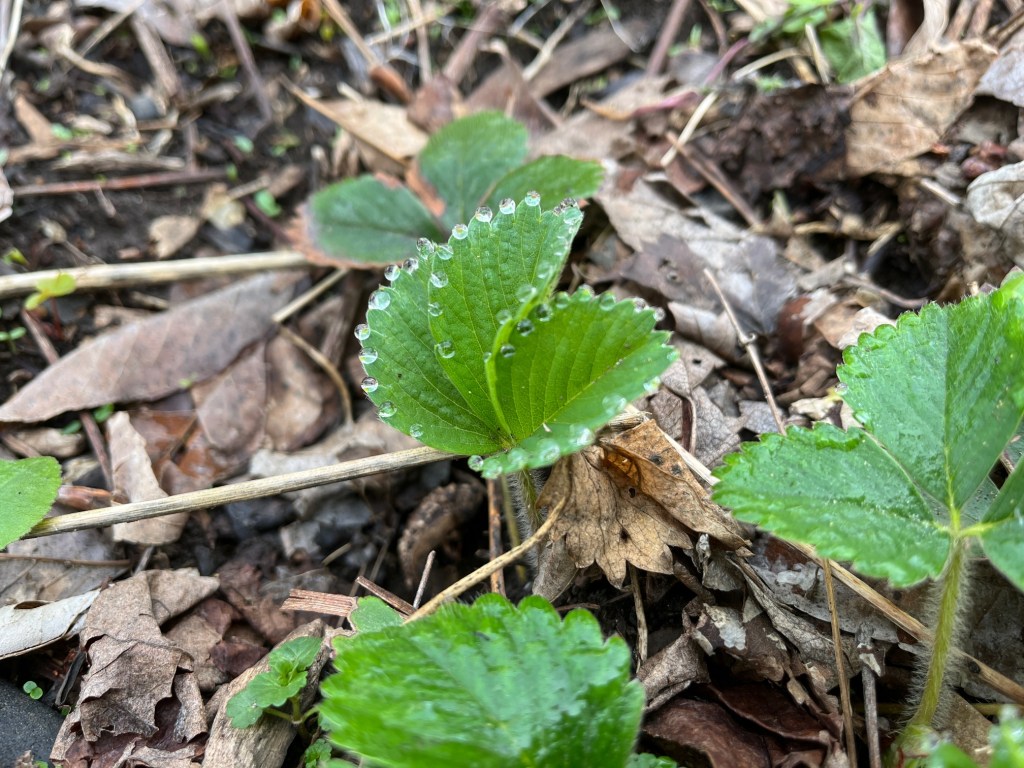
Speaking of early risers, it looks like all of the strawberry plants I put in last year – all 18 or so, literally rescued from a dumpster – seem to have survived.  I’m hoping that by letting them run wild all around the garden, there will eventually be enough strawberries produced that the strawberry-eating wildlife misses a few, so that I can actually eat one.   I’m not optimistic about this, but worst case scenario, at least someone gets fed, and they’re low maintenance.

The droplets on these strawberry leaves are the result of guttation; in wet conditions, water can enter the roots due to relative solute levels and cause pressure to propagate through the xylem, resulting in liquid being pushed out at the leaf edges.

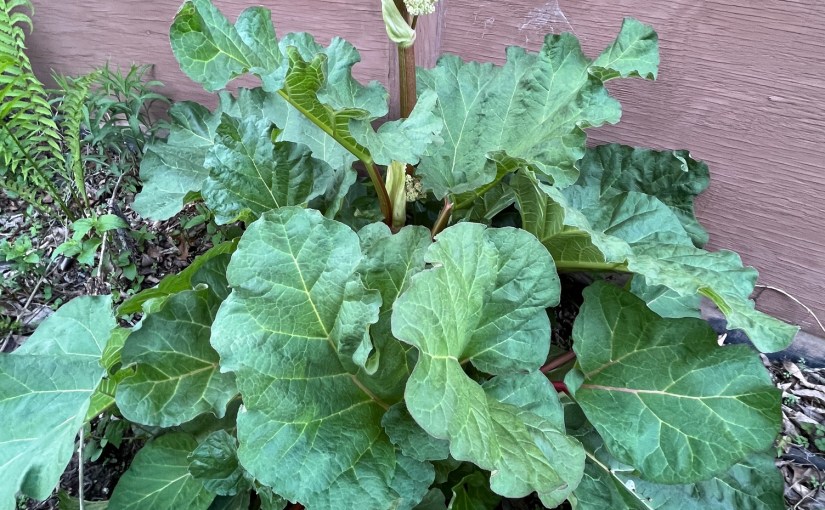
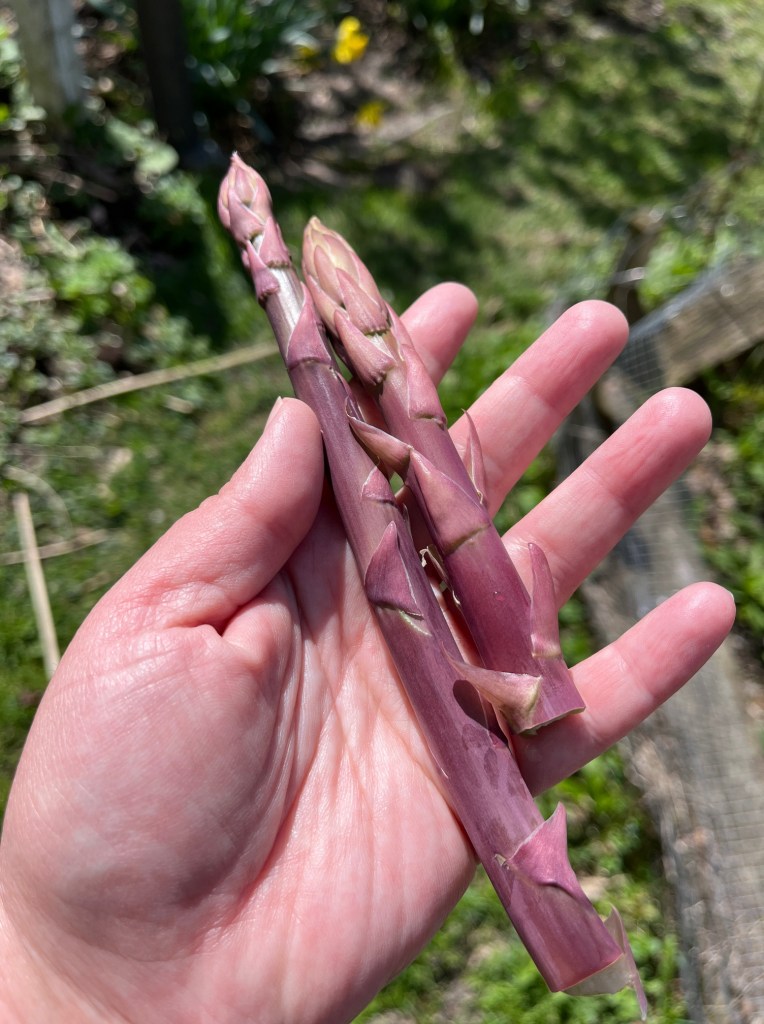
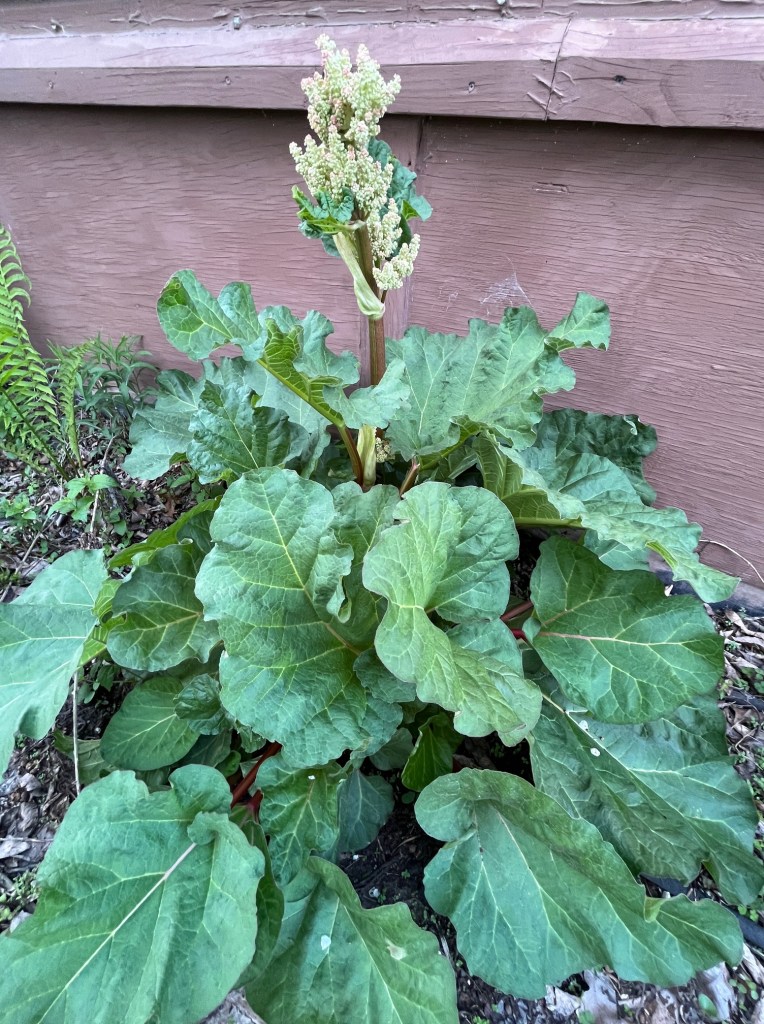
The asparagus yielded our first garden snack of the season; we planted the first crowns four years ago, but asparagus is slow to get established, and this is the first year they’ve been robust enough for me to be comfortable harvesting from them. I did find my first batch of asparagus beetles of the season today, so I’ll have to try to spend some quality time doin’ a bug murder.  Also on the perennial edible vegetable front, the rhubarb has both leafed out, and decided to flower this year, for the first time since we moved in.  I had not realized previously what a slow and dramatic diva the rhubarb flower is; it’s been unexpectedly interesting to watch it grow and unfurl.

Noms!
Category is vernal goddess realness, slay queen!

The plums flowered, followed shortly thereafter by the pears, the honeyberries, and the crabapple.  The black and red raspberries have all leafed out and are doing well, although they’re nowhere near flowering yet. 

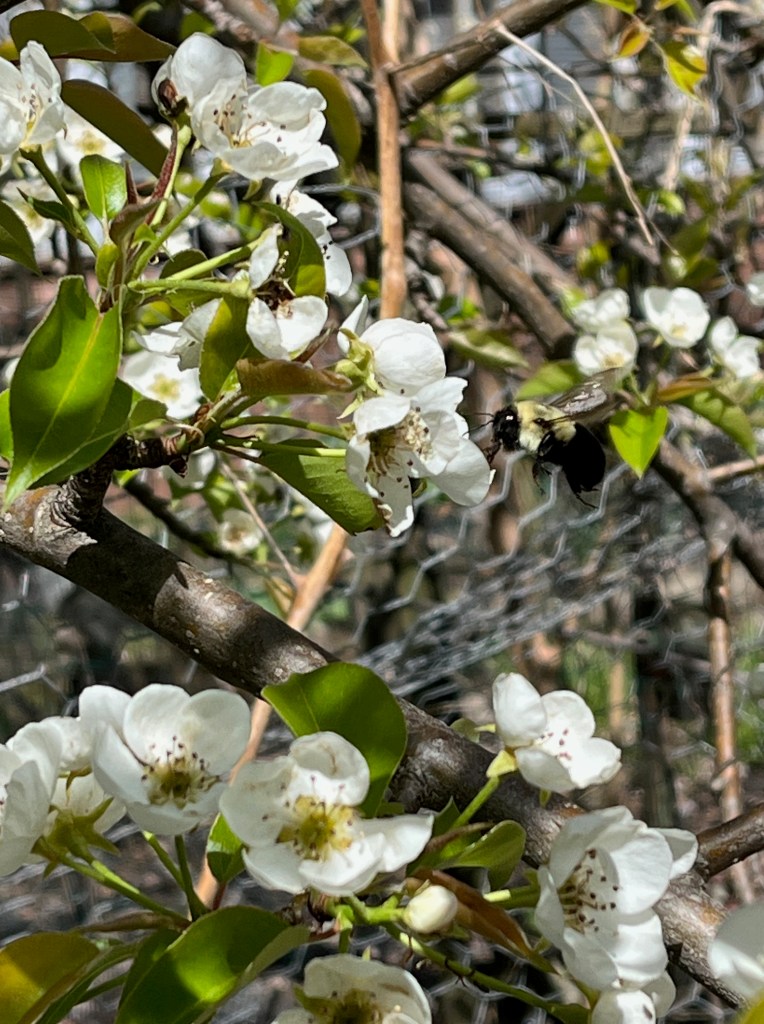
The audible range of buzzing sounds around the pear tree, from a dozen or more different species of bees, is one of my favorite parts of early spring.

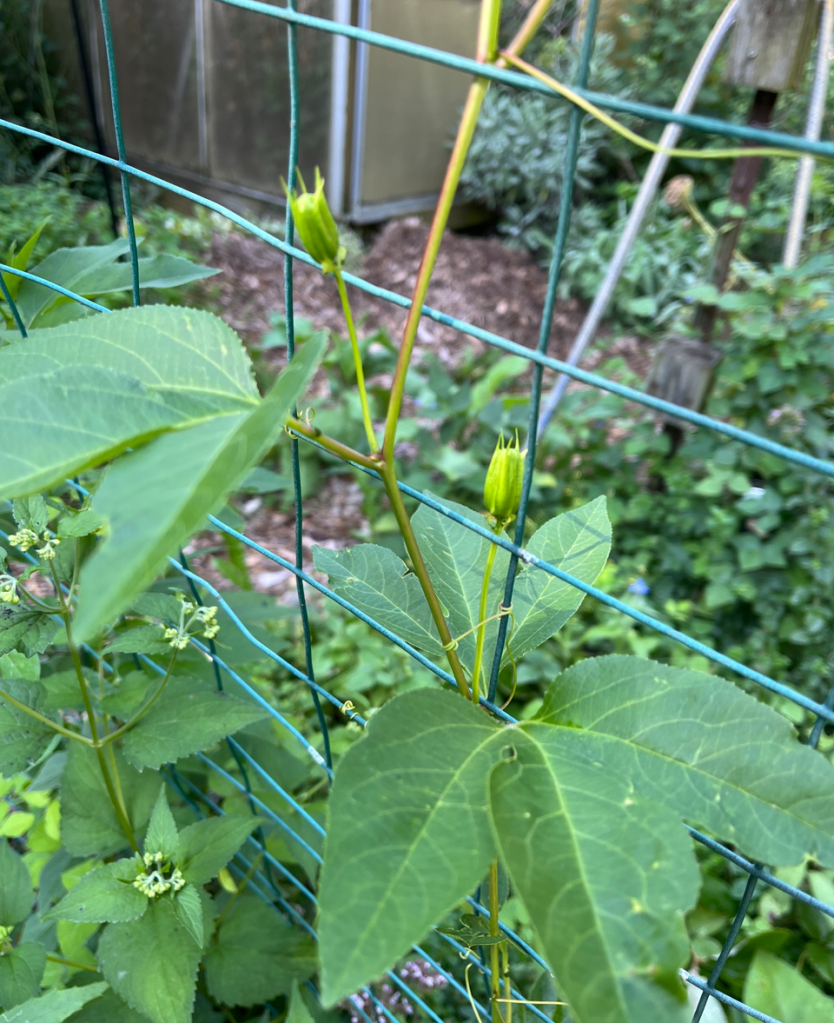
We also added to the mini-orchard; I purchased four pawpaw trees and three maypop vines, and was graciously gifted a number of year-old American hazelnut seedlings by a friend.  After being transplanted to their new homes, the hazelnuts seem unbothered, but the pawpaws and maypops are struggling.  I’ll reserve judgement until they’ve had more of a chance to settle in, though.  

Stressed about my new pawpaw and passionflower babies, but I tend to be a harsh mistress in the garden; I try not to waste a ton of time and energy to make certain plants happy, because I assume if it’s not working, it’s just not a great fit. If these guys fail, I’ll be sad, but I’ll rip ’em out and replace them with serviceberries or something and move on.

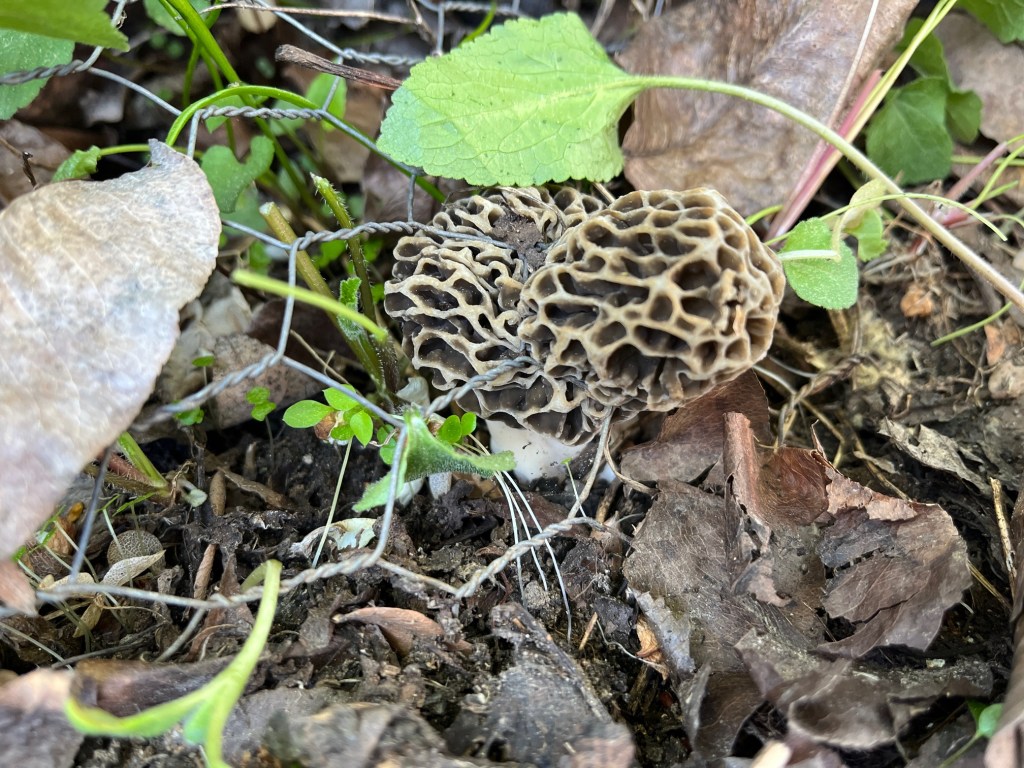
I’m pleased with the progress I’ve made in adding native woodland plants, both edible and non-edible (at least, for humans).  Last year I was able to get some wild ginger from a coworker who was thinning their well-established colony; they apparently wintered quite well and have sprung back.  The nodding onion patch is three years old now and continues to widen, and miraculously, the three ramps that popped up last year – after I spread seeds around two years prior – have returned, and are looking good.  I was also able to get some bloodroot today from a friend whose neighbor was thinning their colony.  As I was clearing some weedy plants from a spot under one of the pears to make room for the bloodroot, I uncovered quite a stately looking morel.  I’ve found a couple half-free morels in the yard before – unfortunately not in time to catch them in an edible state – but I think this one is a white morel (Morchella esculenta), one of the more choice species for consumption.  This one was also too old for eating, but not too old to be broken up and spread around the foot of the other fruit trees, in hopes of future fungal harvests.  

Awkward location, lil buddy!

Next task on the docket is to pot up the tomatoes I’ve started indoors, and to start hardening them off for transplant. Very excited to have so many new plants to get to know this year, and to see our efforts over the last four years to establish natives plants and perennials paying off!

Sugaring, and Springing Forth in Earnest

I’m not quite sure how to do this, but, I want to acknowledge that there’s kind of a lot of terrifying shit going on. I recognize and acknowledge that even in such times, we all need to chop wood/carry water, and that there’s obviously nothing wrong in taking comfort in the domestic and the comfortable. It just feels extremely weird to be assembling a post on my anodyne, cottagecore hobbies at such a time, especially when I have about a dozen half-written posts burning a hole in my Google Drive relating to various aspects of the Big Stuff happening right now. Those thoughts deserve to be polished before I put them out Here, though, and at the same time I want to stick to my goal of posting at least once a month. And maybe hearing about my anodyne, cottagecore hobbies will be in any way comforting to someone. Anyway, here goes.

Maple sugaring went quite well! The weather, despite some turbulence (surprise, here’s a foot of snow overnight, in the middle of March, rapidly followed by 70 degree temps!) stayed cool enough to give us a nice long sugaring season before bud break – which I believe still hasn’t happened quite yet, but should any day. (Bud break is when dormant buds begin to wake up and you can see bits of green start of appear; when this happens – or maybe because of it? I am not sure on the flow of causation here – the tree alters the chemical composition of the sap to better meet the needs of growing, young leaves. The changes mean that the sap turns bitter and unpalatable, known by the strangely cute term “buddy sap”.) About a week ago I noticed when I sampled the latest batch of sap that it was noticeably less sweet than it had been earlier in the season, and the flow rate slowed down dramatically over the last few days, so we decided to call it for the year and pulled out the taps.

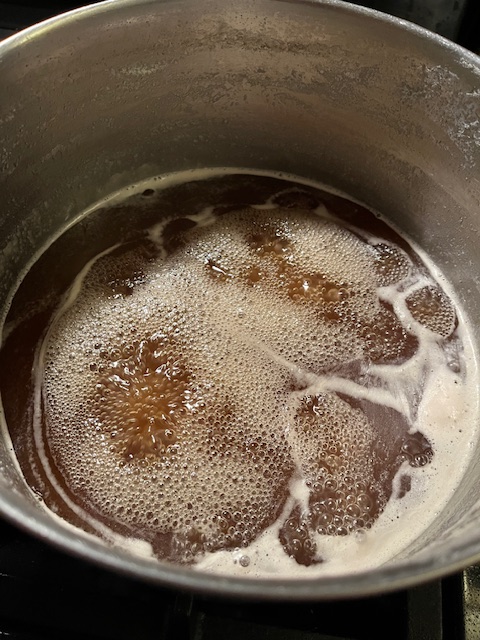
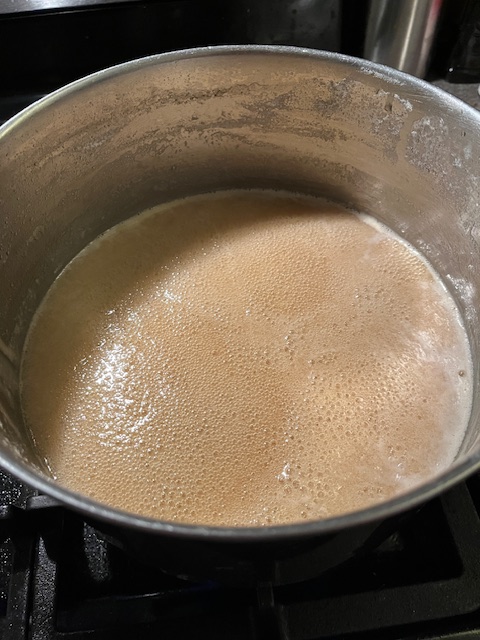
We finished off our very first batch of syrup almost a month ago now, quite on accident. When finishing off syrup – which just means the last stretch of boiling before hitting the right concentration of syrup – there’s a point just as you achieve syrup consistency where it suddenly starts foaming up very quickly, and if you are not paying quite close attention, can quite easily overflow even a relatively large container.

Mistakes were made, we weren’t paying enough attention and we lost maybe a quarter pint (it’s hard to gauge volume when it’s in a spreading pool on your stovetop). I was quite upset for about ten minutes, but I got over it, and we have chalked this up to being an Important Lesson and an Offering to the Kitchen Gods. We didn’t have any further unfortunate incidents, so clearly the sacrifice worked.

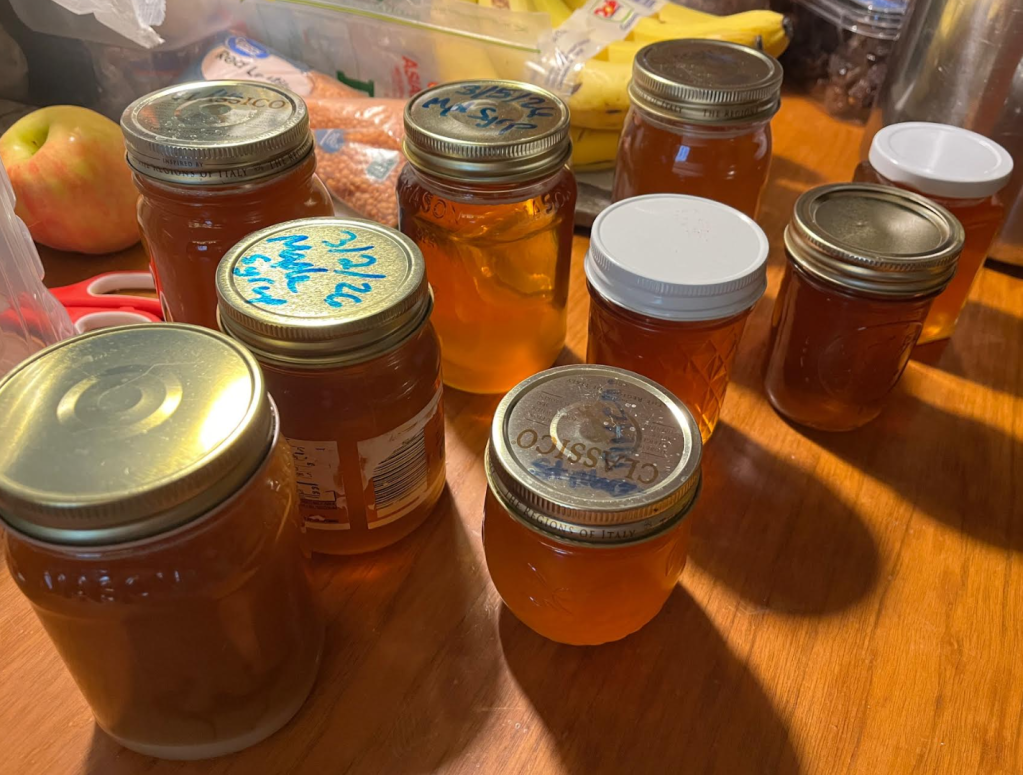
Minor setbacks aside, we ended the sugaring season with about nine pints in jars. We could have done water bath canning and made it all shelf-stable, but….meh, we have refrigerator space. If we get really motivated we could still reboil it and can it.

There were a couple more jars, but they’ve already been distributed to family.

You’ll note in the photo above that there’s a white sediment collecting at the bottom of the jars. This is what’s called niter, or maple sand. Rather infuriatingly, I’ve seen some homesteader influencer type videos where the creator confidently declared that this substance is crystalized sugar, which is absolute bullshit. Sap has plenty of other stuff in it besides sugar, even before bud break; the white precipitate is largely made up of calcium and magnesium. It’s edible and harmless, just not super aesthetically pleasing, so it’s filtered out of commercially produced and packaged syrup. It doesn’t bother us, though, and we are working with such small quantities that I think we’d lose a meaningful amount of our syrup if we filtered it, just due to amount retained/lost in the filter itself. I actually kind of weirdly like it; it has no flavor, and when you get down to the bottom of the jar, you just end up with sort of a very slightly grainy paste consistency that spreads very nicely on a toasted bagel.

We did learn a couple things during this sugaring season – mostly about what sorts of things work to weigh down the sap collection container in 70mpg wind gusts – but overall the process is….strangely doable? Weirdly manageable? It’s time consuming and there are certainly ways you can run into trouble – like my parents’ neighbors, who apparently boiled so much sap in their kitchen so quickly that the moisture did serious damage to their kitchen and they had to get all the drywall replaced – but those issues are avoidable with some common sense. I highly recommend it to anyone who has a bit of time, an appropriate tree, and any degree of sweet tooth. There is nothing quite as tasty as french toast served with your own homemade syrup.

Sugaring season’s end dovetailed nicely with our window for early spring garden prep. This week I’ve gotten some last minute pear tree trimming in and worked on cleaning out dead plants from some of the garden beds; tonight I set up my first tray of seedlings. Need to start another tray or two worth of seeds, see about getting some hazelnut shrubs ordered, and decide what my strategy is going to be for attacking the invasive Scilla this year.

As never-ending and frustrating as gardening can be, it’s comforting and distracting to have such a wide menu of tasks open to me. Things will slip, some things may just get away from me entirely (this is at least the third year I have wanted to get hazelnuts in), but that’s okay – there will always be more to do than I can handle, and still, somehow, the things I do get done will be enough to matter.

That’s probably a good lesson for me to carry with me out of the garden and into the rest of my life, particularly right now. I shall endeavor to do so.