Spring hath sprung, and continues to spring along at rates I cannot hope to keep pace with, but that’s part of the fun, and I try anyway.
The first flower up and blooming in the yard was, as per usual, Siberian Squill (Scilla siberica). She is beautiful, but she is also fecund, inedible to native wildlife, and persistent. She is my garden nemesis.
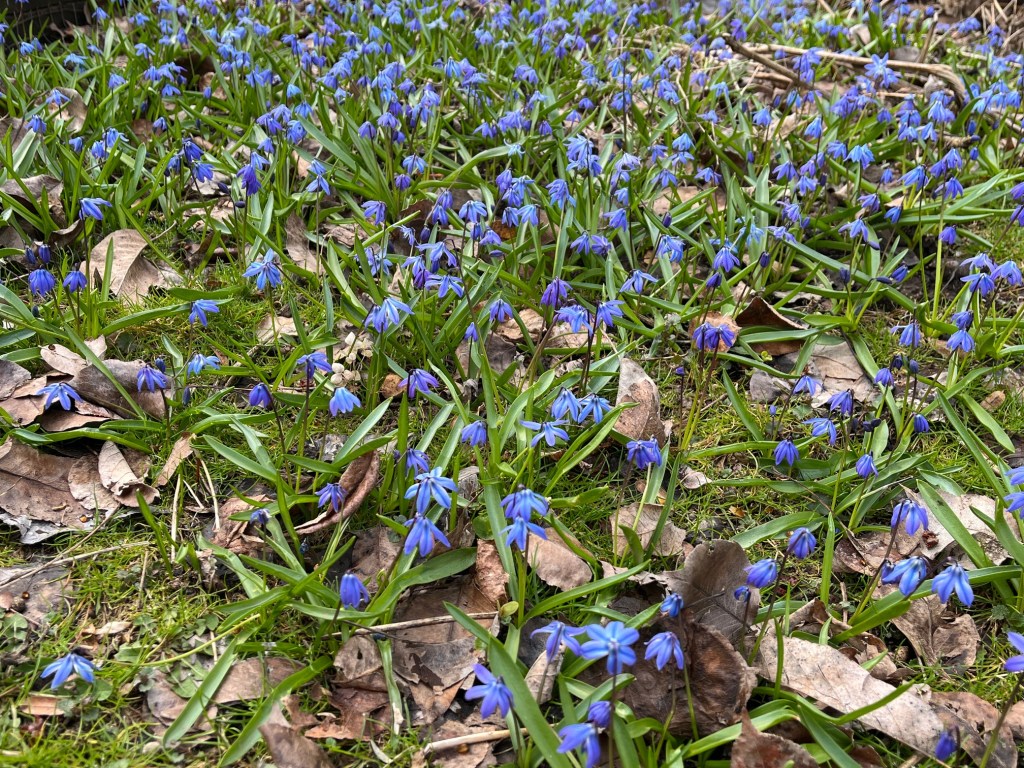
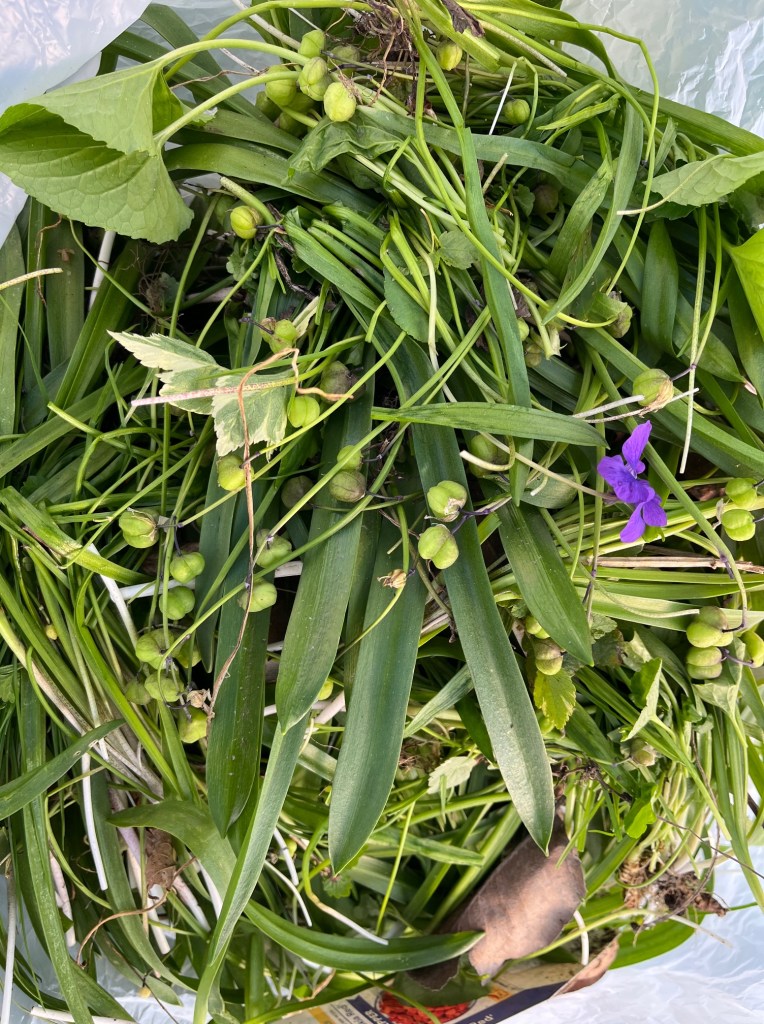
This year, starting in late March, I have pulled up three full plastic grocery bags worth of squill, doing my best to get the bulbs. I barely made a dent in them. They’ve likely been here decades longer than me, so it’s going to be a years-long uphill battle, but they’re simply too invasive and aggressive for me to tolerate them in the numbers they’re in. I am researching early blooming native alternatives, because squill at least does the courtesy of having very early and cold-tolerant blooms, which help provide for insect pollinators as they wake up, but it’ll be a long time before I make enough of a dent in them to necessitate functional replacements.
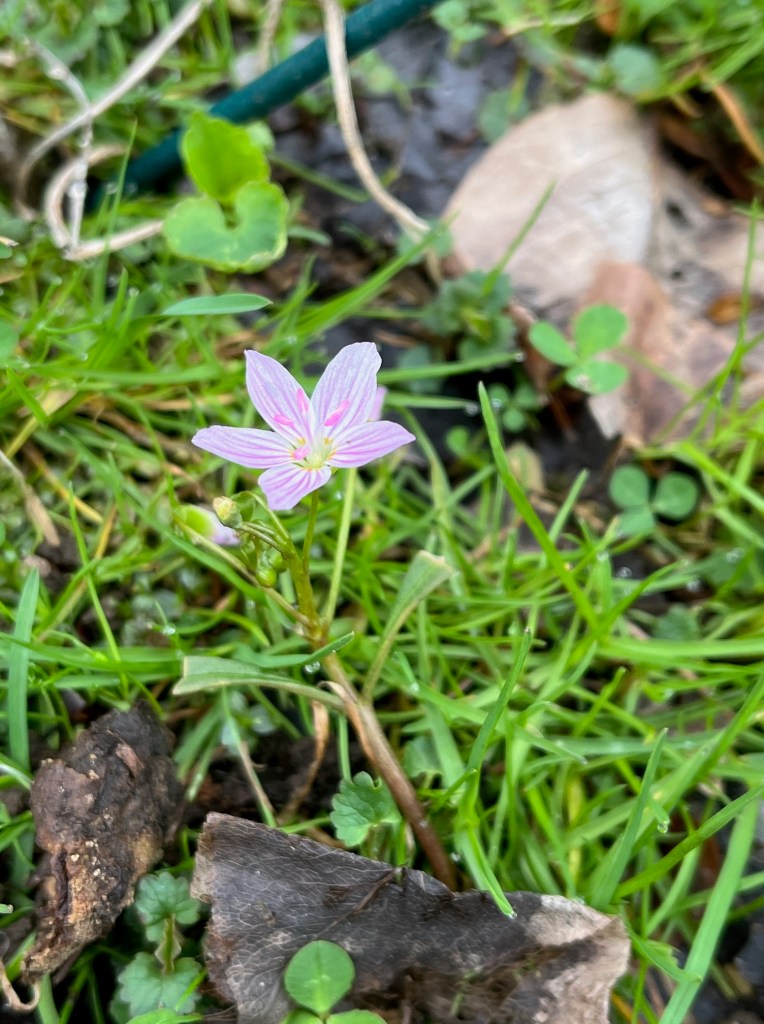
Counterbalancing the unexpected and unwelcome squill, is the unexpected and very welcome Spring Beauty (Claytonia virginiana). I picked up some seeds for this woodland spring ephemeral about four years ago, and spread them in an area under our pear trees. They then did not make any appearances until confusingly, last year, one of them popped up in the far side of the yard, and then this year, two popped up closer to the pear trees, but in the middle of a grassy area. I know the seeds for spring beauty are distributed by ants, so….maybe they are showing up where they have because ant reasons? Regardless, I’m delighted they decided to join the party, and have marked their location so they don’t get mowed (er, again) until they’re done blooming.
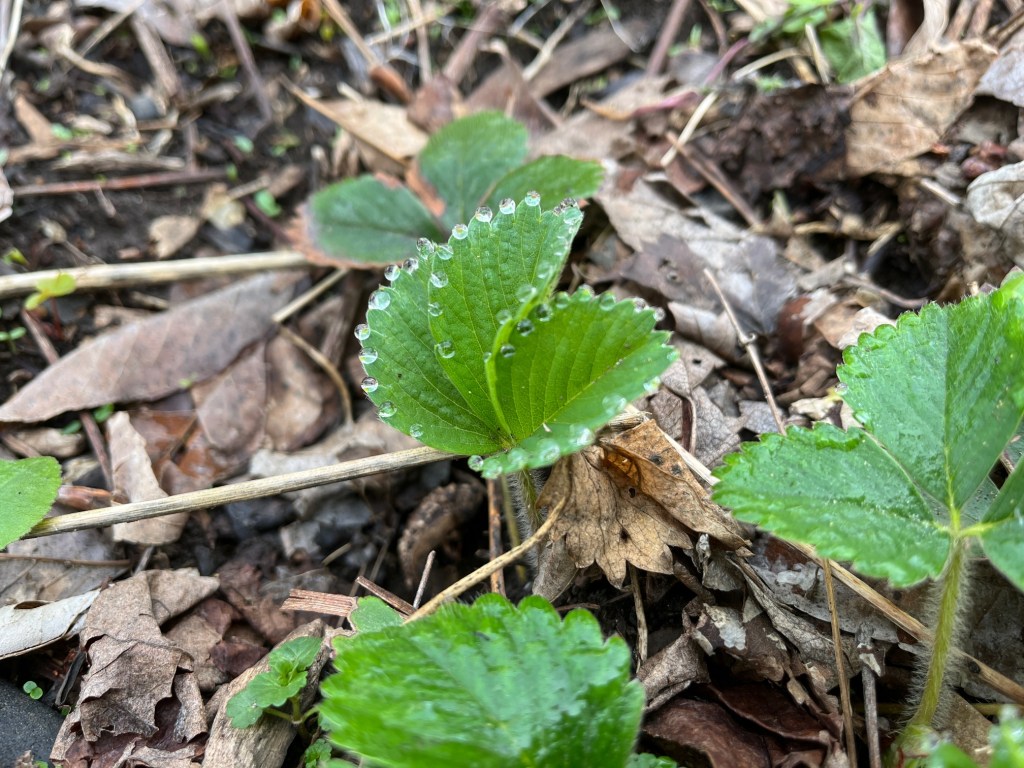
Speaking of early risers, it looks like all of the strawberry plants I put in last year – all 18 or so, literally rescued from a dumpster – seem to have survived. I’m hoping that by letting them run wild all around the garden, there will eventually be enough strawberries produced that the strawberry-eating wildlife misses a few, so that I can actually eat one. I’m not optimistic about this, but worst case scenario, at least someone gets fed, and they’re low maintenance.
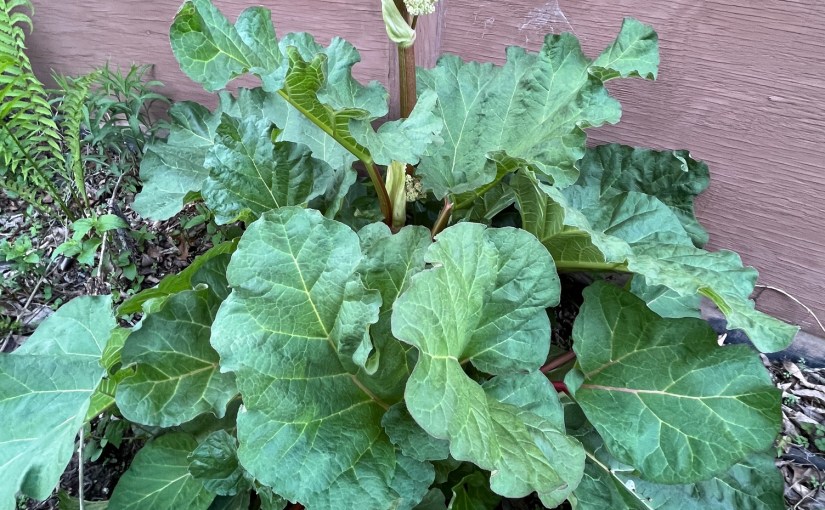
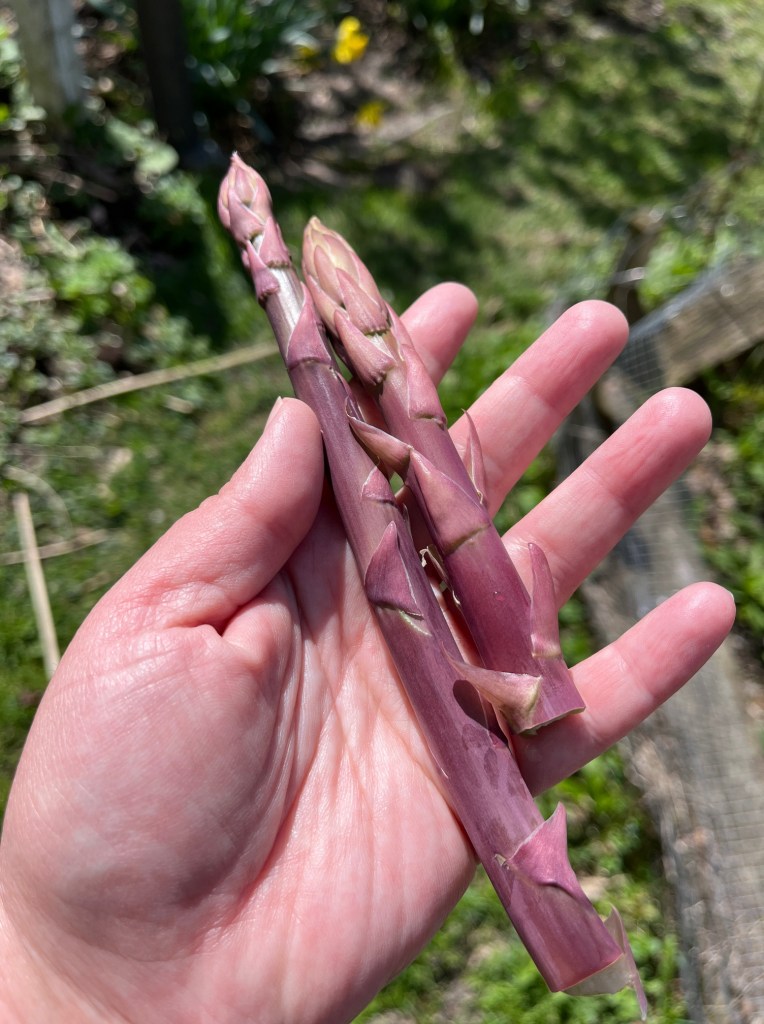
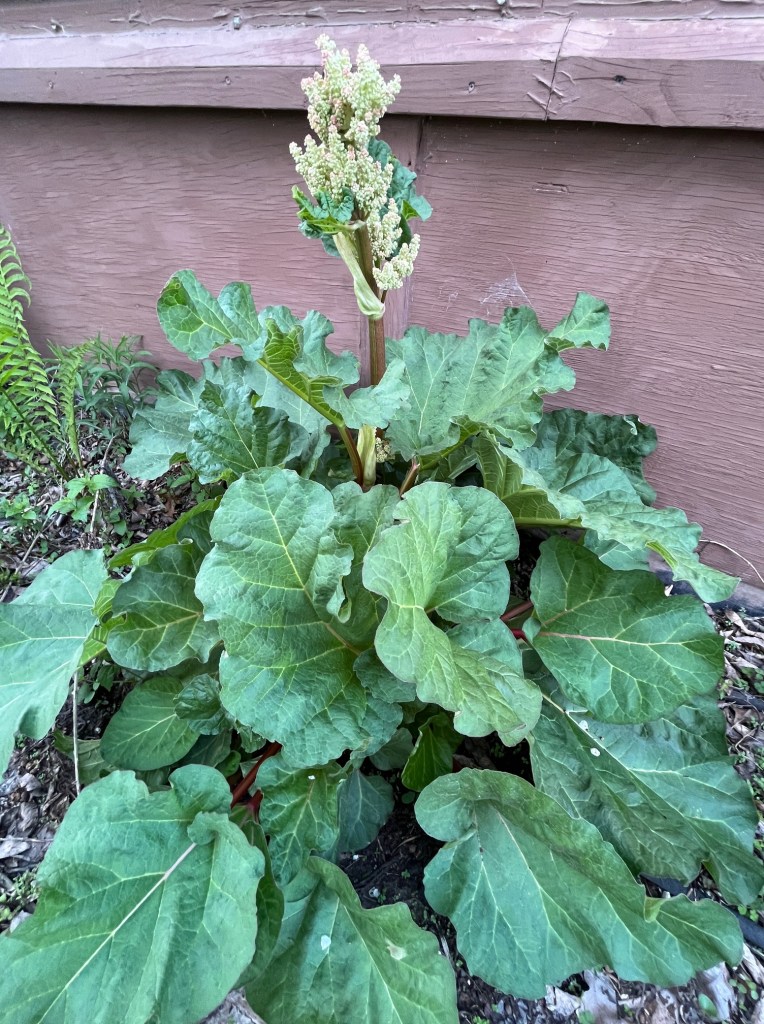
The asparagus yielded our first garden snack of the season; we planted the first crowns four years ago, but asparagus is slow to get established, and this is the first year they’ve been robust enough for me to be comfortable harvesting from them. I did find my first batch of asparagus beetles of the season today, so I’ll have to try to spend some quality time doin’ a bug murder. Also on the perennial edible vegetable front, the rhubarb has both leafed out, and decided to flower this year, for the first time since we moved in. I had not realized previously what a slow and dramatic diva the rhubarb flower is; it’s been unexpectedly interesting to watch it grow and unfurl.
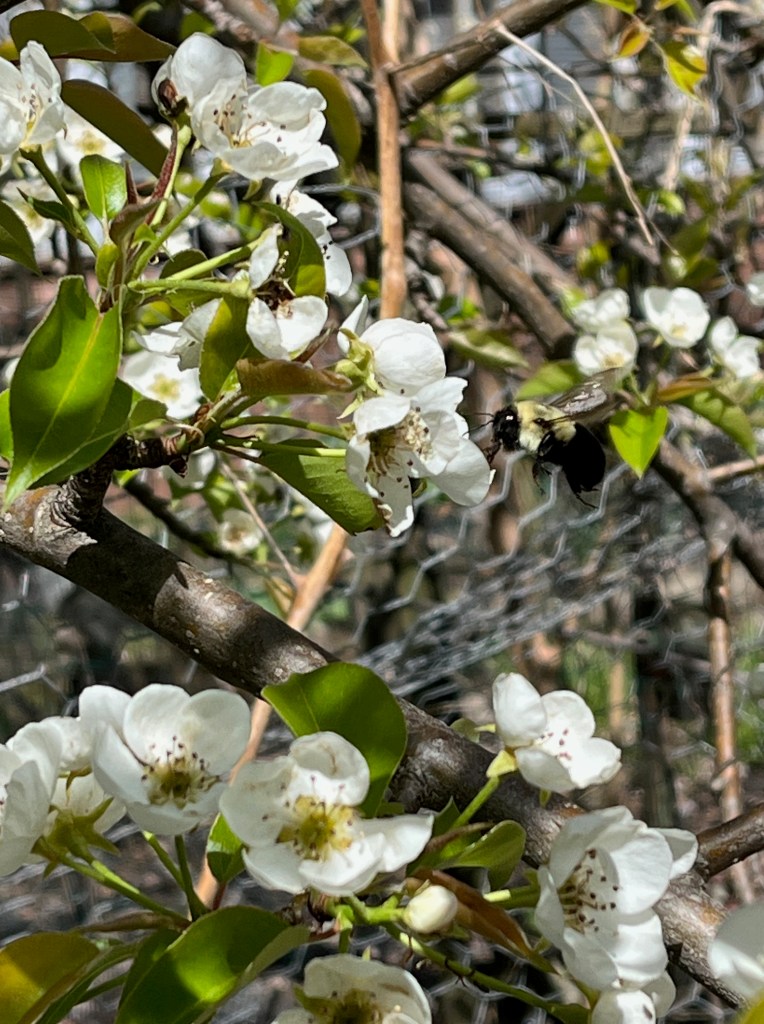
The plums flowered, followed shortly thereafter by the pears, the honeyberries, and the crabapple. The black and red raspberries have all leafed out and are doing well, although they’re nowhere near flowering yet.
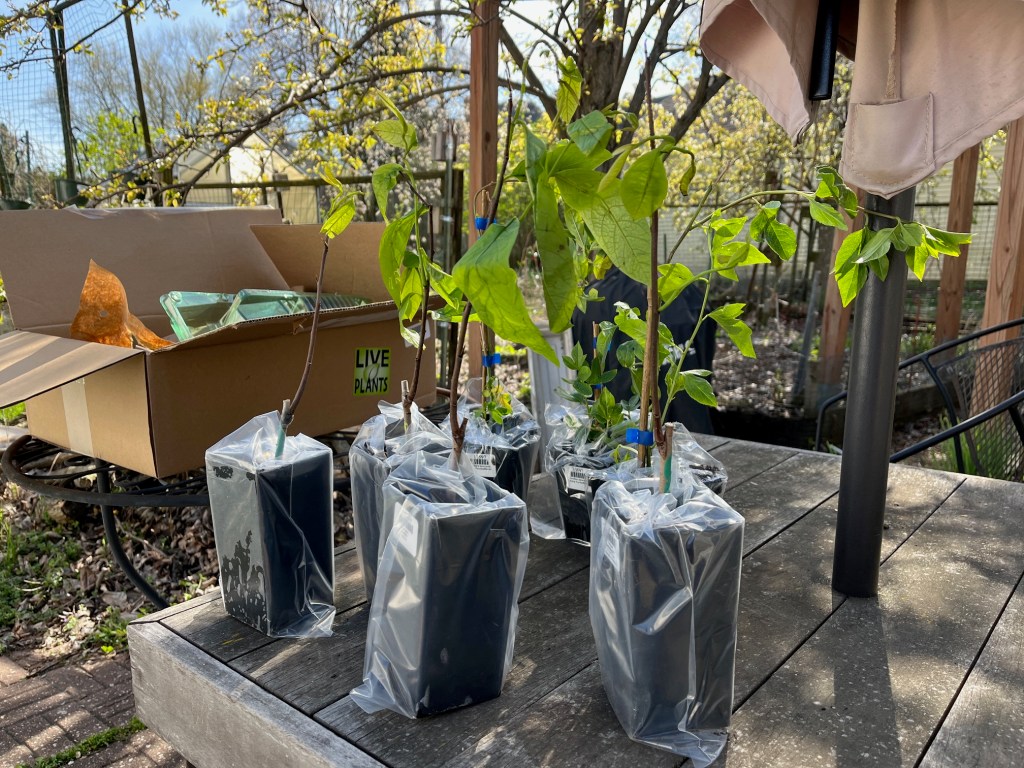
We also added to the mini-orchard; I purchased four pawpaw trees and three maypop vines, and was graciously gifted a number of year-old American hazelnut seedlings by a friend. After being transplanted to their new homes, the hazelnuts seem unbothered, but the pawpaws and maypops are struggling. I’ll reserve judgement until they’ve had more of a chance to settle in, though.
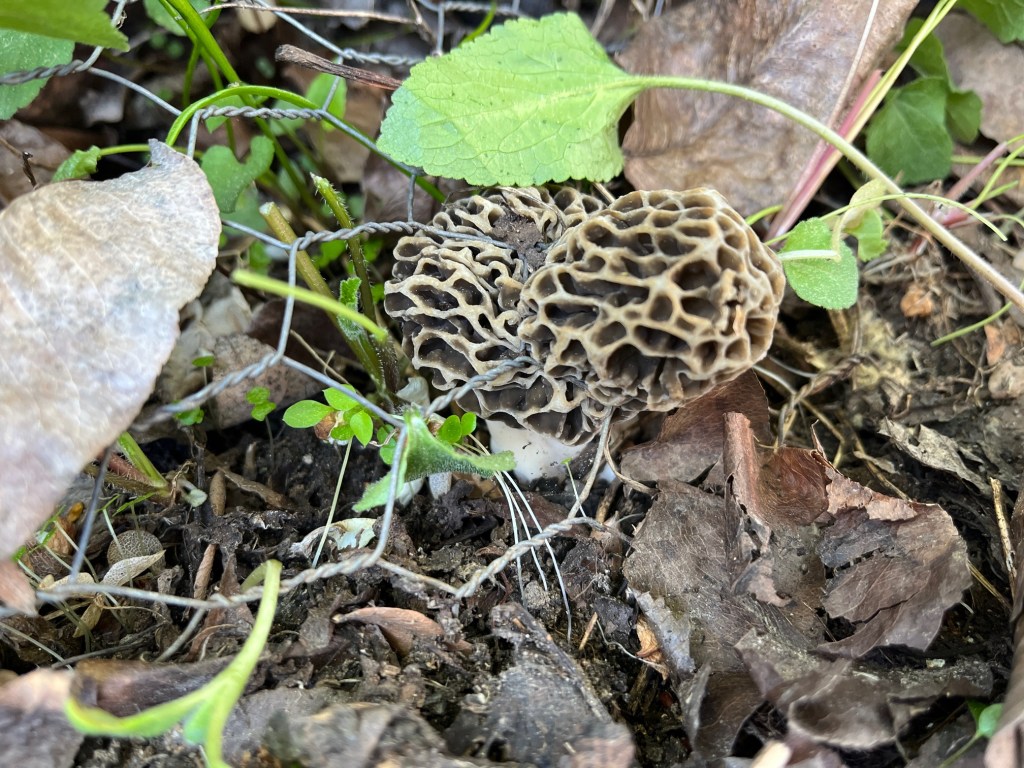
I’m pleased with the progress I’ve made in adding native woodland plants, both edible and non-edible (at least, for humans). Last year I was able to get some wild ginger from a coworker who was thinning their well-established colony; they apparently wintered quite well and have sprung back. The nodding onion patch is three years old now and continues to widen, and miraculously, the three ramps that popped up last year – after I spread seeds around two years prior – have returned, and are looking good. I was also able to get some bloodroot today from a friend whose neighbor was thinning their colony. As I was clearing some weedy plants from a spot under one of the pears to make room for the bloodroot, I uncovered quite a stately looking morel. I’ve found a couple half-free morels in the yard before – unfortunately not in time to catch them in an edible state – but I think this one is a white morel (Morchella esculenta), one of the more choice species for consumption. This one was also too old for eating, but not too old to be broken up and spread around the foot of the other fruit trees, in hopes of future fungal harvests.
Next task on the docket is to pot up the tomatoes I’ve started indoors, and to start hardening them off for transplant. Very excited to have so many new plants to get to know this year, and to see our efforts over the last four years to establish natives plants and perennials paying off!

