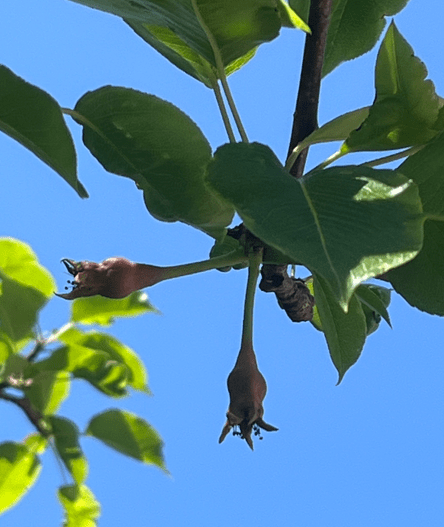
Spring progresses, slipping prematurely into summer at times. The jagged progression of temperatures has had some casualties; in particular, due to a late freeze in April, I think we lost our entire plum crop and 95%+ of the pears. On the bright side, I guess, I am not having to spend any time culling tiny pears, and the ones that do make it will likely be larger. In previous years we’ve had issues with how absurdly productive the trees are – with branches breaking under their weight – so it’s also probably a good thing for the trees to have a year off. It’s a bit of a bummer, to be sure, because we and so many people around us look forward to those pears every year, and they have been SO very reliable in the past. It feels like a pointed reminder of the fragility of the systems we depend on, including agricultural ones, and the necessity of both redundancy and diversity.
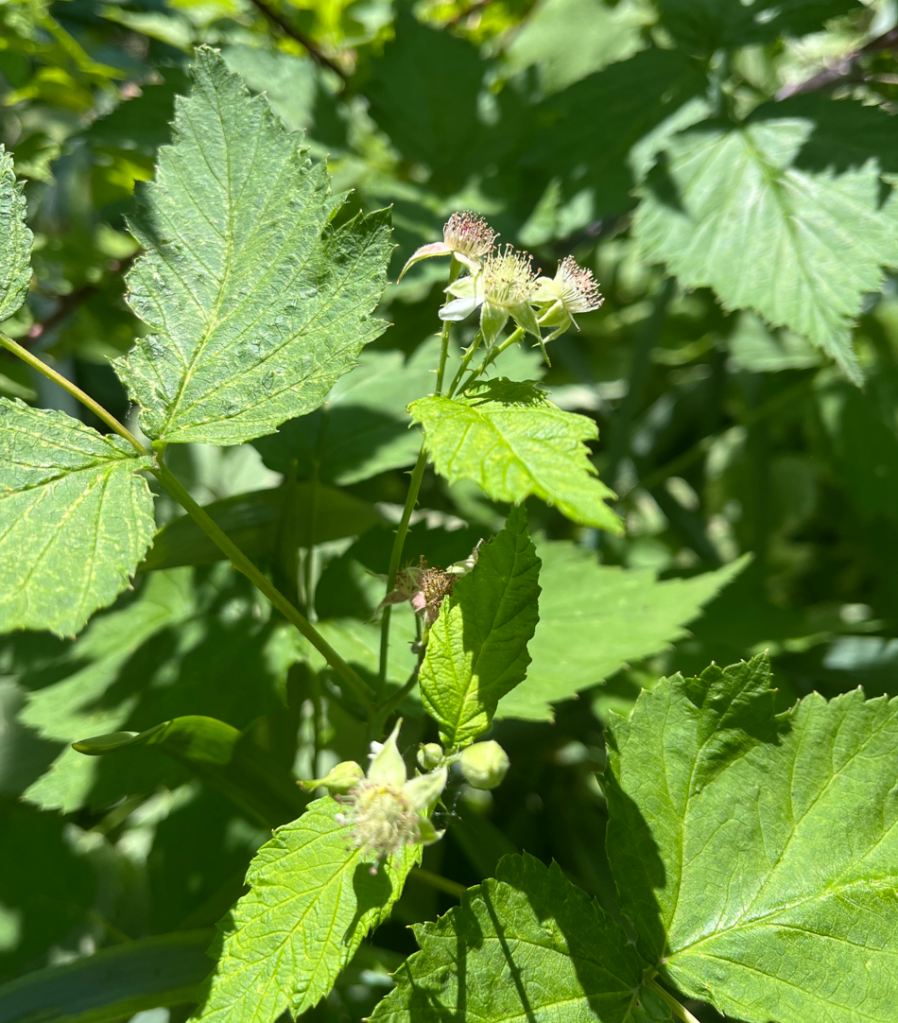
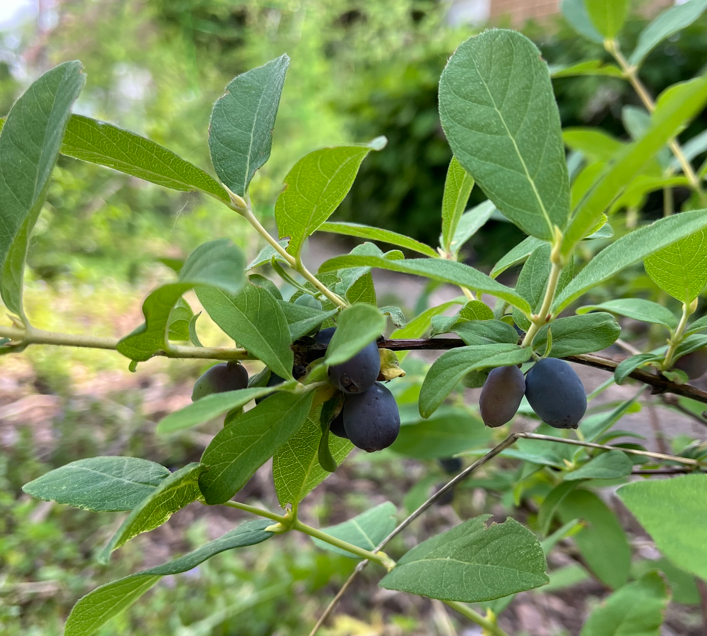
In fact, it is looking like it’ll be a better year for some of our other fruits, although not in sufficient volumes to compensate for the pears. The black raspberries are coming along nicely; I’m not convinced we’ll be at “pie” volumes yet, but I think we’ll at least graduate from “eat three berries and be glad for it” to “eat a few handfuls of berries apiece” territory. Our honeyberries have also really started taking off; the bushes are looking flush and healthy, and I’m regretting not giving them more space. Looks like they might be sending up some suckers so I may be able to spread out their clones, at least. We were not very impressed with the couple of extremely sour berries we tried last year, but I have since learned that we likely picked them far too early; apparently you’ve supposed to give them a good 3-4 weeks after they turn dark blue, and only pick them once they’re just about falling off the plant, and the flesh inside the berry has turned from green to blue. I’ll report back next month, since they’ve started cascading into blues this week.
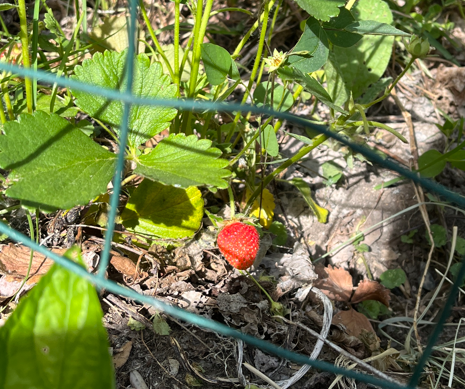
The strawberries – many of which were plants recovered from a dumpster last year when entire trays of them were tossed out – are coming along nicely. Will there be enough that the critters will not eat all of them, or at least not take a bite out of every one? Unclear. The plants do seem to be doing their dead level best to produce, though, and I’m optimistic.
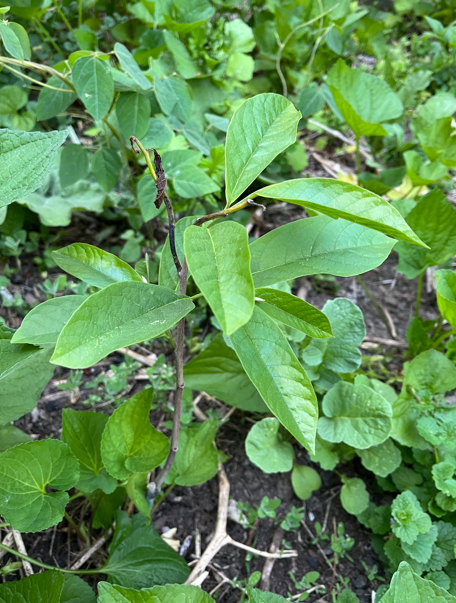
In other perennial news – the pawpaws I put in recently seem to be settling in quite well. I was quite worried – two of them were reduced essentially to sticks for a while, and the other two only had jagged, decrepit leaves remaining after shipping – but they are all slowly and steadily leafing out and seem at least somewhat happy where they are. Just gotta keep them going for 5-7 years now to get them to fruiting age, about the same wait as we’ve got for the little American hazelnuts. I look forward to enjoying them all in my 50’s.
Over the holiday weekend, my partner undertook the major project of turning the compost pile. The pile is about 6’x6’, around 3’ tall, so this is truly a *project*. Over the course of about three days he raked out the top layers, transferred the finished compost at the bottom over to the “ready to use” pile, and then mixed and raked everything remaining back into a nice pile. The fencing around the pile is on its last legs, so the tentative plan is to rip the structure out one of these years, and build a new one with several sections for material of various levels of degradation, in hopes that it makes the pile a little easier to manage.
(I have chosen not to include a picture of said compost; be assured that it is teeming with life and earthy smells.)
While my partner was pitchforking through the muck, I worked on transplanting tomato plants I started from seed, and bell peppers from a friend. Have also gotten a few of my skirret starts into the ground; I’m curious to see how well they do, considering that I think their ph preferences clash with the current batch of compost (being that it’s heavy on wood ash).
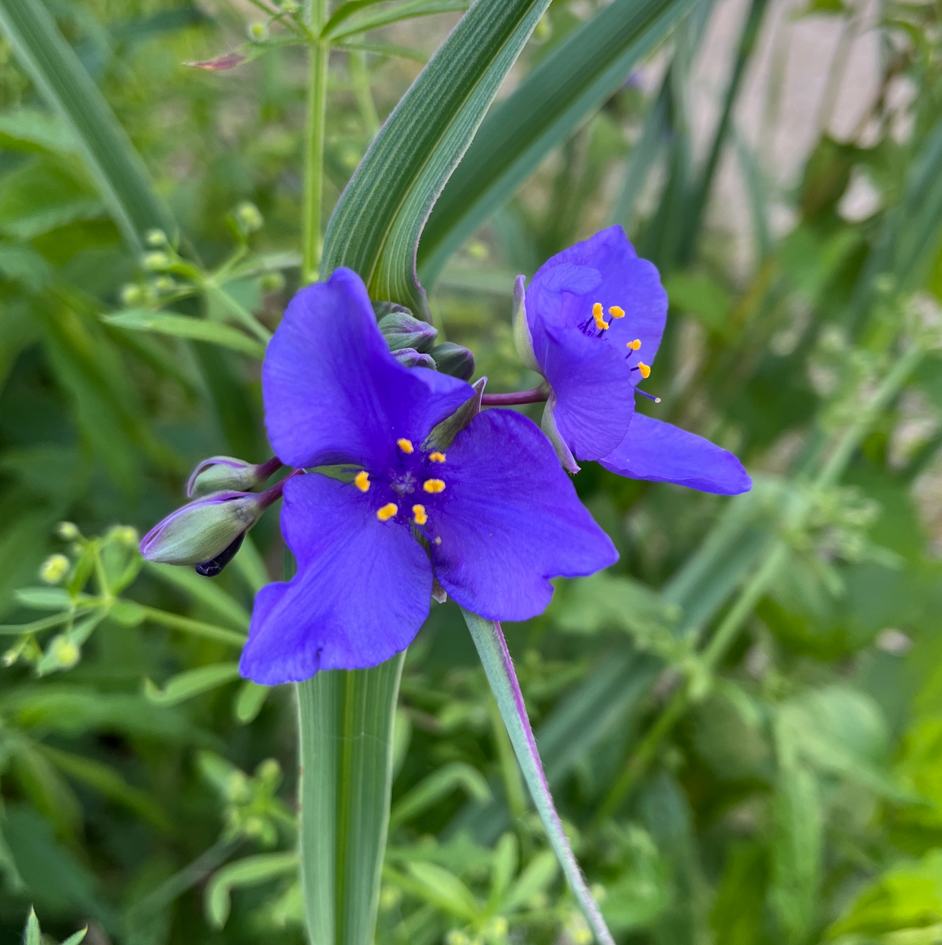
I’ve been noticing that insect abundance is surprisingly low at the moment. It may not stay that way, and I’m not saying we should all panic or anything, this is just one local observation. It’s just been hard to ignore when it’s so obvious in my day to day. In past years, when the pears and plums were blooming, or the honeysuckle, or the salvia, they would be covered in bees of at least a dozen species. There were so many that the buzzing rose to a pleasant, constant hum, like a little pollinator kazoo chorus during the daytime. There are still bees, of many species, but their numbers are considerably lower, and I miss their little buzzy background noise.
It’s difficult to spend so much time in close contact with nature and not think about the polycrisis, because there are a hundred reminders, like the bees, and the pears I mentioned above. Sometimes that’s sad – a reminder of things that have been lost, and things that will be lost. It’s also interesting, though, and a reminder that the only constant in life is change. I commented to a friend recently, in a conversation about current happenings in politics, trade, and war, that it was in many ways a deeply frightening time to be alive – but that it’s also an incredibly interesting one. I probably engage with more of the scary information than I need to, because understanding it, parsing it, gauging reliability, and stitching together greater understanding from the pieces, is just so bloody fascinating.
But, I know who I am, and my tendency towards anxiety, so I can’t always engage with that knowledge. Sometimes I need to go plant a seed, pull an invasive, or water a plant, and just remind myself that there are things that I can, if not control, at least influence. And so again, I find myself back in the garden, because it’s therapy.